Province of Florence
Holiday in Tuscany villas, far from the madding crowd

Province of Florence
Florence, as well as its province, is famous worldwide for its Renaissance period, for its arts and culture, its good food, its friendly people as well as for its beautiful Tuscan villas, its marvellous holiday homes in the Chianti area, its vineyards and olive groves, its castles and its old farmhouses dotting the gently rolling hills.Just a few notes, intended, not for the ordinary tourist but, for the wise traveller, ready to relish the town, to capture that special flavour which will urge him to return in the future, so as to add a new tessera to the never-ending mosaic of Florence. Enjoy the experience of spending a remarkable holiday in one of the rental apartments in Florence, right in the old town, just a few steps from the Cathedral, the Palazzo Vecchio, or the Uffizi Gallery, in touch with the breathtaking atmosphere of this pearl of Tuscany.
The history of Florence and its province has ancient origins, but let us start from the town's religious hub and enjoy the great visual impact of the dramatic dome of Santa Maria del Fiore by Brunelleschi.
Where does all this come from?
From the Renaissance which has left permanent marks in the town’s cultural milieu.
Under the impetus of brilliant artists, 15th century Florence was enriched and renewed, without fundamentally altering its appearance. It was Brunelleschi, with his research into perspective and his precocious ideas about city planning, who dominated the architectural scene in the first half of the century. Besides the dome of Santa Maria del Fiore, he built the Ospedale degli Innocenti (the Foundling Hospital), designed the Old Sacristy in the basilica of San Lorenzo, started Santo Spirito, built the Pazzi Chapel in the monastic complex of Santa Croce as well as the central block of Palazzo Pitti.
Generally speaking it was an extraordinary time in the artistic life of Florence with painters such as Masaccio at work in Santa Maria del Carmine, Paolo Uccello in the Green Cloister of Santa Maria Novella, Ghirlandaio in its main chapel as well as in the Sassetti Chapel in Santa Trinita, Fra Angelico in the convent of San Marco, not to mention sculptors like Ghiberti, Donatello and Luca della Robbia.
Undoubtedly a primary role was played by the Medici, a powerful and influential family who governed Florence from the 14th to the 18th century, including popes and rulers like Lorenzo the Magnificent, Cosimo the Elder and women like Catherine and Marie, both destined to rule the fate of France. Starting from a banking activity they established a seigniorial government, headed by Cosimo the Elder. With the aid of his favourite architect Michelozzo, he promoted a number of important architectural projects, ranging from the construction of the Dominican convent of San Marco to the renovation of his own residence, the austere palace on via Larga (now via Cavour : see apartment for rent in Florence in our webpage, ref. 126) that was to provide a model for so much of the 15th century civil constructions. This was the case with the large palace that Filippo Strozzi had built by Benedetto da Maiano.
The golden age ushered in by Cosimo the Elder was continued by his grandson Lorenzo, the “Magnificent” who, unlike his grandfather enjoyed presenting himself in the guise of a prince. More than a businessman, he was a fine politician and a cultured man. A poet and a writer himself, he chose to surround himself with men of keen intelligence, gathered together in the celebrated Platonic Academy at the Medici villa at Careggi. This was his great legacy to Florence before the period of political upheaval to which the city was subjected for several decades after his death in 1492.
At the beginning of the century the most significant artists in Florence were without any doubt Leonardo and Michelangelo. Both were commissioned by the gonfalonier Pier Soderini to fresco a battle scene (actually never finished) in the Salone dei Cinquecento, Hall of Five Hundred, in Palazzo Vecchio, but the former soon left the city, never to return, while the latter had already begun to pay frequent visits to Rome. Among Michelangelo’s greatest creations are worth a mention the Laurentian Library and the New Sacristy in San Lorenzo.
The definite reestablishment of a cadet branch of the Medici rule, through Cosimo the 1st, ushered in a long period of political stability, centred on the strong personality of the duke, the true architect of regional unification. An excellent organizer, he set about the creation of a strong state, increasing his power with his prestigious marriage to the daughter of the viceroy of Naples, Eleonor of Toledo. He transferred the court to the former Palazzo dei Priori, then subjected to incessant works of restoration and enlargement. While lacking the humanistic culture of Lorenzo, he continued the family tradition of patronage, embellishing Florence with fountains, statues, columns, and arcades. The building that now houses the Uffizi Gallery was also intended to produce a scenic effect: a curious U-shaped structure designed by Vasari between the Piazza della Signoria and the river to house the principal magistracies of the duchy of Tuscany. Cosimo extended it with a corridor up to Palazzo Pitti, passing over the ancient Ponte Vecchio, as a “secret” link between the heart of political life, represented by Palazzo Vecchio, and the new family residence of Palazzo Pitti.
In fact his wife, disliking the enclosed spaces of the building on Piazza della Signoria, urged a move to the more salubrious suburban 15th century palace opening onto the scenic Boboli Gardens built for the banker Luca Pitti. Today it is one of the city's most important monumental complexes, a sort of citadel of museums housing the ducal collection of paintings (Galleria Palatina) along with collections of silverware, semiprecious stones, gems, ivories and porcelain that belonged to the ruling dynasties.
Under Cosimo, and later his sons Francesco and Ferdinando, there was a shift in the traditional centres of power. While under Cosimo the Elder and Lorenzo the Magnificent the urban area was comprised between the Basilica of San Lorenzo and the Annunziata, including San Marco, the hub of political life was now located between Piazza della Signoria and Palazzo Pitti. This did not prevent the dukes from leaving symbols of their authority all over the place. The basilica of San Lorenzo became the Medici pantheon thanks to Ferdinando, also responsible for the construction of the Belvedere Fort at the top of the Boboli Gardens and the splendid Villa di Artimino, outside the city walls. Later Florence would face a long period of economic stagnation up to the Lorraine dynasty, whose most enlightened figure, Peter Leopold, managed to operate fundamental changes in the fields of economy and law.
More incisive interventions in the urban fabric were to appear in the 19th century with the opening of wider and straighter streets, the construction of new bridges, the realization of the Neo-gothic facades of Santa Croce and of Santa Maria del Fiore and the project to transform the city into the capital of the new kingdom of Italy. A radical reorganization over a few decades drastically altered its appearance, bringing it closer to the contemporary cities of Europe, inflicting permanent wounds such as the demolition of the city walls replaced by a ring of roads on the model of the Parisian boulevards and the destruction of the old marketplace along with the Jewish ghetto in the area now occupied by Piazza della Repubblica and its adjacent streets.
It is worthwhile remembering the numerous museums, ranging from the Uffizi, to the nearby Bargello Art Museum, from the Academy, to the Opificio delle Pietre Dure (Workshop for Hard Stones), up to San Marco where, among the winged creatures of Fra Angelico, our wise traveller might satisfy the need of escaping to the silence of the inner time.
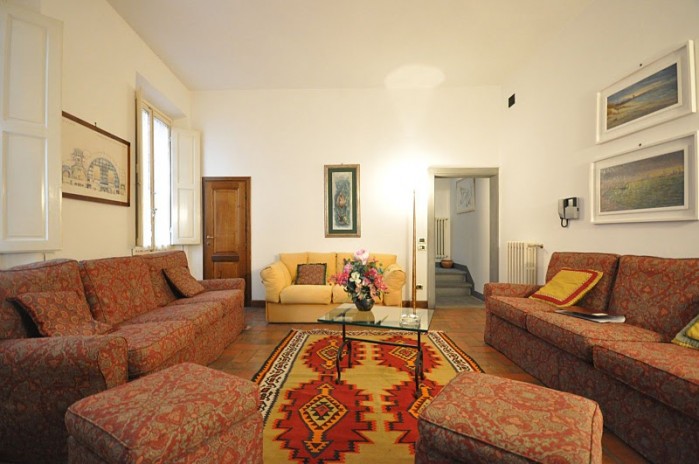
Florence - RIF. S177
Lovely accommodation in Florence located right in the historic centre of town, in the Santa Croce area (300 m from the Church).
This flat for holiday rent has recently been restored, maintaining the traditional Florentine style, and has all the comforts. The accommodation, 110 sqm, is a small two stories house located in the heart of Florence, in via dell’agnolo. At the entrance, a flight of stairs leads to the apartment. On the first floor, there is a living room, a fully equipped kitchen (fridge, oven, toaster, kettle, coffee machine, microwave, dishwasher) with dining area and one bedroom with two single beds. On the second floor, there is a double bedroom, a big bathroom with a shower and bathtub, and a single bedroom with an en-suite bathroom fitted out with a shower. Air-conditioning in all bedrooms.
At 200 mt away there is a car park – parking rate not included in the rent. At guest’s disposal Internet connection wi-fi, dishwasher, washing machine, hairdryer.
This holiday apartment in Florence is within walking distance of Ponte Vecchio, the Cathedral square, the Uffizi Gallery, Palazzo Vecchio (ca. 750-950 mt away) and other main attractions of Florence. Restaurants, shops etc. nearby. The train station is 1600 mt away.
[Continues..]
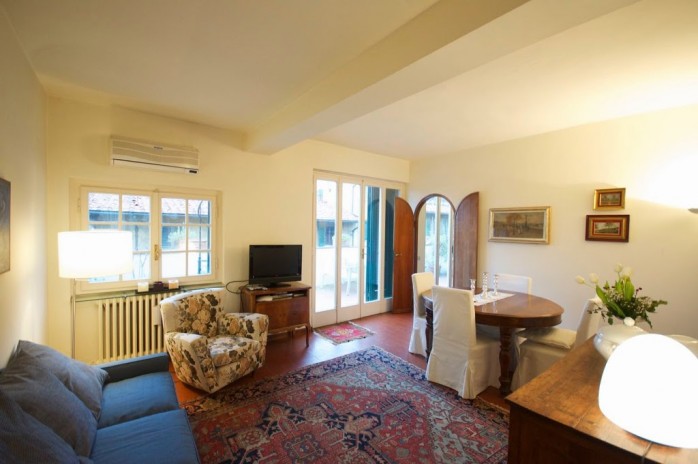
Florence - RIF. S230
This elegant apartment is located in Via dei Bardi, on the west side of the River Arno, just 100 meters from Pontevecchio , in the heart of the “Oltrarno” district, the old part of town full of local artisan’s workshops. This charming flat is on the top floor : a small lift takes guests to the 5th floor, after which there are 12 steps leading to the apartment. Very bright thanks to the large living room windows, the highlight of this accommodation are its three terraces. One has access from the living room, another from a bedroom, whilst the third is a roof terrace, with access by winding staircase from the living room terrace and with a breathtaking view over Florence’s monuments, such as Giotto’s Campanile, the Cathedral and Palazzo Vecchio. This tastefully renovated apartment (100sqm) can comfortably accommodate up to 6 people and consists of a living-dining room, a fully equipped kitchenette (fridge, dishwasher, coffee machine, toaster), 2 double bedrooms, 1 twin bedroom and 2 bathrooms, one fitted with bathtub/shower and the other with shower. At guest’s disposal an air conditioning system, Sat tv, internet Wi-fi connection, washing machine.
Within walking distance of the beautiful Ponte Vecchio, the Uffizi Gallery (400 mt), Piazza Signoria (450 mt) and other main sights of town, this holiday apartment is in an ideal position for those wanting to visit by foot. Right next to the building are small supermarkets, restaurants, a bank and shops.
[Continues..]
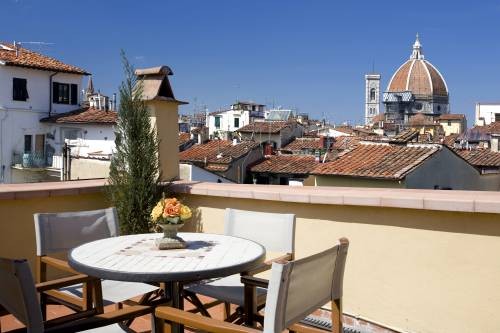
Florence - RIF. S121
This rental apartment in Florence is located on the last of three floors (no lift) of a 19th century building in the old town centre, at walking distance from the most important museums. Recently renovated with comfortable furnishings, this 85 sqm flat consists of living room with dining area, a small kitchen, 2 bathrooms with shower and 2 double bedrooms. A short staircase leads up to an attic with another bathroom and a divan bed for only one person. Another staircase, from the living room, reaches a terrace with an outstanding view of the Cathedral, Giotto’s Bell Tower and a complete prospect of the city.
This holiday apartment with terrace in florence is also near the "flea market" and the historic food market of Sant'Ambrogio and is to be found in a lovely, typical area of Florence abounding in craft shops and local restaurants.
One of our best accommodations in Florence for those wanting to enjoy the city to the full.
[Continues..]
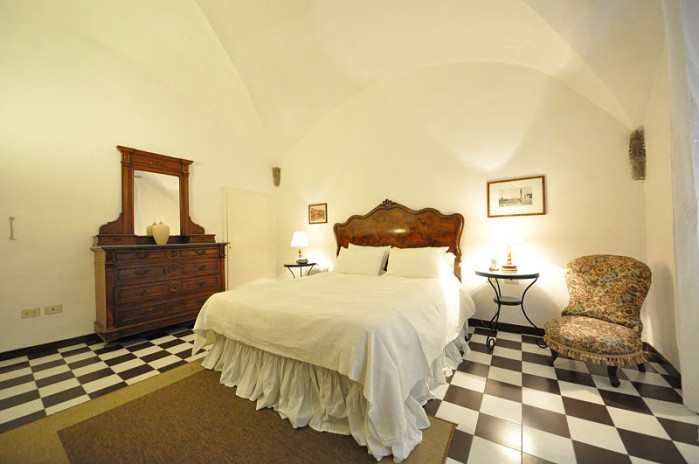
Florence - RIF. S221
This rental apartment in Florence is located in the historic centre of town in an old building situated in a pedestrian precinct with numerous shops, restaurants and typical trattorie. On a mezzanine floor of an old building, this flat has been completely restored to the Florentine style and can comfortably accommodate 4 people. It consists of a living room with fully equipped kitchenette and dining area, a double bedroom, a twin bedroom and a bathroom with shower.
This holiday apartment in Florence is in an ideal position for visiting on foot the town and its mains sights, such as the Cathedral, Ponte Vecchio, the Uffizi Gallery and Piazza della Signoria.
[Continues..]
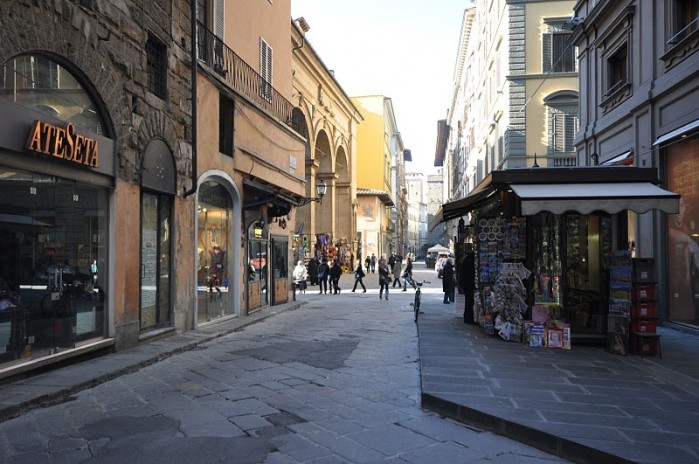
Florence - RIF. S210
Located in the historic centre of town, this rental apartment in Florence is near the Loggia del Mercato Nuovo, Loggia of the New Market, formerly a district rich of silk artisan shops, today it is a fashionable residential area with lovely shops, trendy restaurants and wine-bars. On the second floor without lift, the flat can comfortably accommodate up to 6 people and consists of a living room with a double sofa bed, kitchenette and dining area, a double bedroom, a double bedroom with french bed (1+1/2) and 2 bathrooms with shower. All rooms are air-conditioned and there is a Wi-Fi internet connection.
This holiday apartment in Florence is situated at walking distance from all the main attractions in town, such as the Cathedral (300 mt), Palazzo Vecchio (only 40 mt away), the Uffizi Gallery (200 mt), Pontevecchio 300 mt and the train station is 1 km away
[Continues..]
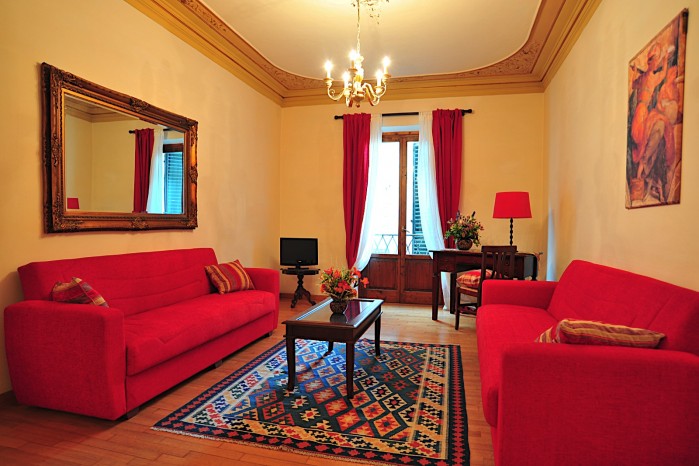
Florence - RIF. S165
This elegant, large rental apartment in Florence is located in one of the most sparkling quarters of the historic centre, near Piazza Santa Croce and the Bargello Museum. On the second floor of a historic building with lift, this lovely self catering holiday accommodation consists of a bright living room with 1 single divan bed (pls note that every morning sheets must be taken off the bed and made again at night), a fully equipped kitchen, 2 bedrooms, a double and one with twin beds, 1 bathroom with shower and 1 bathroom with Jacuzzi bathtub.
In the surroundings are restaurants, theatres, museums and shops to please all tastes. A short walk through the medieval centre will take you to the Cathedral, the Ponte Vecchio and the Uffizi Gallery. A perfect accommodation in Florence for those wanting to enjoy the city to the full.
[Continues..]
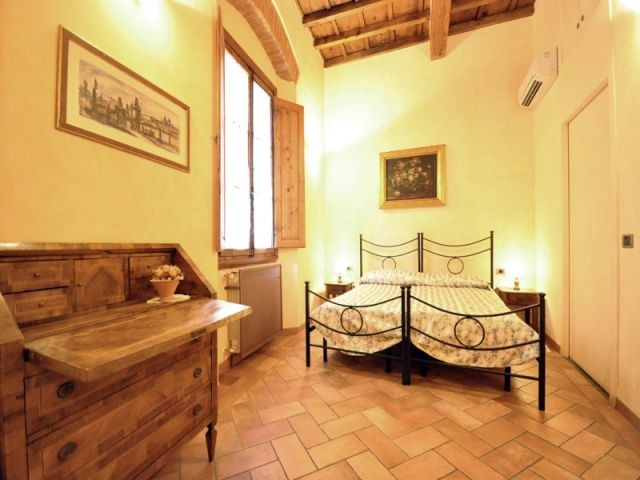
Florence - RIF. S209
This holiday apartment in Florence is located right in the historic centre of town, near the Ponte Vecchio. Situated on the second floor, without lift, this apartment can comfortably accommodate 2 people and consists of a living room with fully equipped kitchenette and dining area, a double bedroom and a bathroom with shower. Among the facilities A/C, Wi-Fi internet connection and Sat-TV.
Just a short walk from the tourist attractions of town, such as the Cathedral, Palazzo Vecchio and the Uffizi Gallery, this apartment for rent in Florence is in an ideal location for sightseeing.
[Continues..]
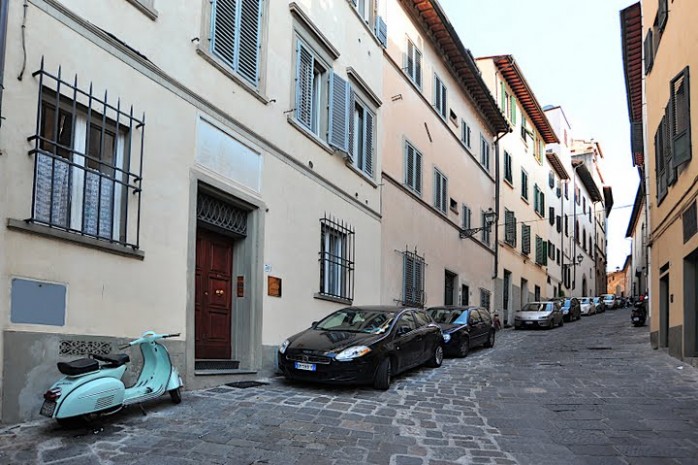
Florence - RIF. S144
These lovely, comfortable accommodations in Florence are to be found on the west side of the Arno river in the old part of town known as “Oltrarno”, surrounded by local artisan’s workshops. Located in a historic building, the lodgings consists of 7 holiday apartments on various floors. Elegantly furnished, these accommodations offer a comfortable stay also for big family numbers or groups of friends.
Within a few minutes’ walk from the famous, beautiful Ponte Vecchio, the Uffizi Gallery and Piazza Signoria, these holiday apartments in Florence are in a very quiet area being in a controlled traffic zone. In the basement of the building is available a common laundry area equipped with washing machine and dryer. Nearby there is a garage where to park the car.
[Continues..]
Florence - RIF. S187
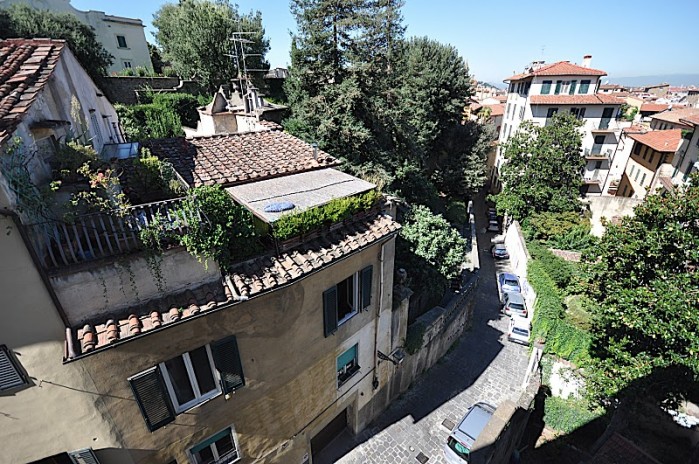
This lovely holiday apartment in Florence is located on the west side of the Arno river, in the old part of town known as Oltrarno, surrounded by local craftsmen’s workshops. This luxury accommodation is on the 3rd floor, with lift. Very bright, its windows overlook some of the most beautiful monuments of Florence, such as the Cathedral, Palazzo Vecchio and the Basilica of Santa Croce. The flat (90sqm) can comfortably accommodate up to 6 people and consists of 2 double bedrooms, 1 twin bedroom, 2 bathrooms of which one with shower and the other with bathtub, a living room with dining area and a fully equipped kitchenette.
Amenities: internet WI FI, air conditioning, TV, washing machine, dishwasher, electric oven, micro-wave, kettle, toaster, hair dryer, fridge and freezer, iron and ironing board.
In the basement of the building a common laundry area, equipped with washing machine and tumble dryer, is available. Nearby there is a garage where to park the car.
Within walking distance of Ponte Vecchio, the Uffizi gallery and Piazza Signoria, this apartment for rent in Florence is, however, in a very quiet area, being in a controlled traffic area, and is right next to the Boboli Gardens, within walking distance of Piazza Pitti.
[Continues..]
Florence - RIF. S237
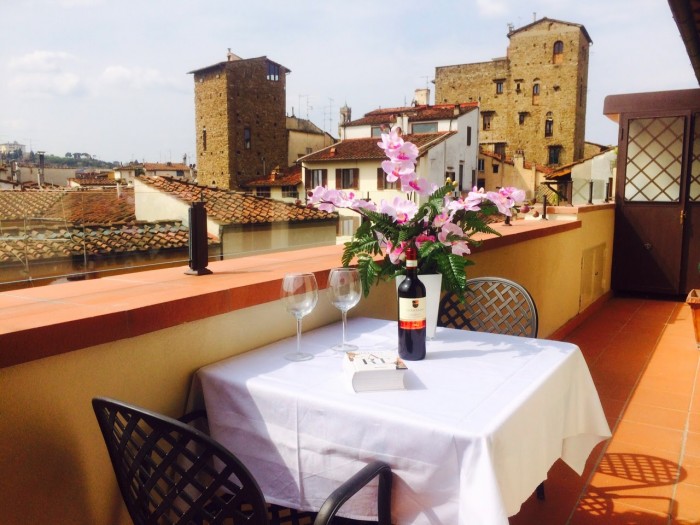
This lovely holiday apartment is located in Via dell’Oriuolo, in the heart of Florence. It is a one bedroom apartment suitable for 3 people (25 sqm + 8 sqm of terrace) on the fourth floor of a historic building, with lift, at only 250 metres from the Duomo Square (Cathedral square). Furnished with antique and modern furniture, the flat consists of a living room with fully equipped kitchenette (toaster, microwave, oven, coffee maker, dishwasher, washing machine), dining area, and a single sofa bed, a double bedroom and a bathroom fitted with shower. A terrace offers guests a beautiful view over the Church of Santa Croce. At guest’s disposal also a Wi-Fi internet connection, air conditioning and Sat TV with USB plug.
This flat in the heart of the historic centre of Florence, is located in a controlled traffic zone, within walking distance of Santa Croce square (400 mt), the Accademia Gallery, the Uffizi Gallery (800 mt), Ponte Vecchio (900 mt) and Piazza Signoria (750 mt), as well as most town sites. The train station is 1km away.
[Continues..]
Florence - RIF. S249
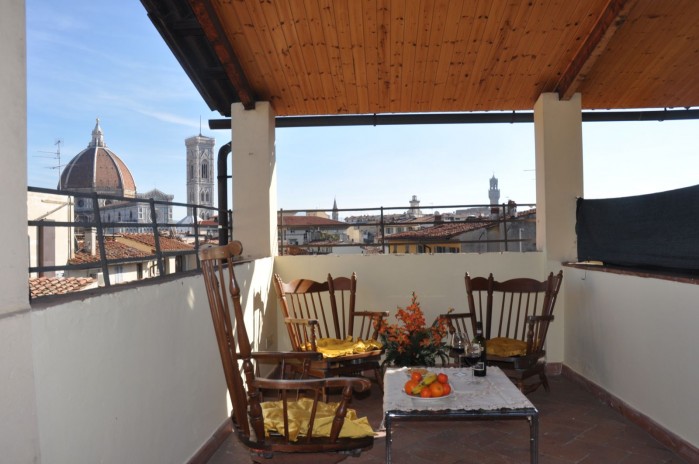
This holiday apartment in Florence is right in the centre of town and has a roof terrace with a breathtaking view over the Cathedral, Giotto’s bell tower, the Medici Chapel and Palazzo Vecchio. Situated on the third floor (lift available) of a typical Florentine building, this sunny, spacious flat (140 sqm) has recently been renovated and beautifully decorated. The apartment is on 3 floors and consists of a large living room with 2 sofas (of which one a double sofa bed), 2 double bedrooms (which can be twin on request) and a bathroom fitted with shower on the first floor. From the living room a staircase leads to the second floor which consists of a fully equipped kitchen, a double bedroom (which can be twin on request) with en-suite bathroom fitted out with bathtub. Air conditioning is only on this floor. Stairs from the kitchen lead up to the large, beautiful, furnished terrace where guests can enjoy al fresco dining with a magnificent view.
This apartment for rent in Florence is in the Cathedral and San Lorenzo area, at a 10-15 min. walk from anywhere in Florence: monuments, museums, shopping and restaurants. The historical daily market of San Lorenzo is nearby, with its outdoor market offering local handmade products, clothes and souvenirs and the older indoor market selling delicious food products.
[Continues..]
Florence - RIF. S252
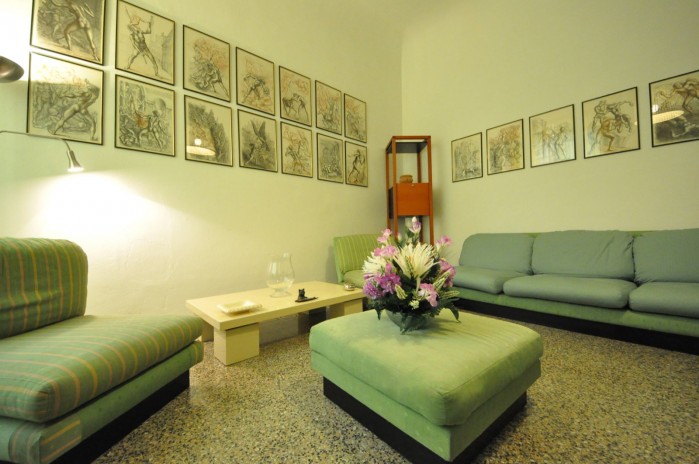
This charming holiday apartment in Florence is in the historic centre of town, near the main railway station of Santa Maria Novella. This large flat (130 sqm) is on the first floor of a building with lift and consists of a large entrance with dining table and sofa, a living room with another dining table and a double sofa bed, a double bedroom with en suite bathroom fitted with bathtub, a twin bedroom and a toilet.
Within walking distance of the famous market of San Lorenzo, this accommodation in Florence is in an ideal position for visiting the main museums and monuments of town. The neighbourhood is full of shops, banks, bars, restaurants and trattorias.
[Continues..]
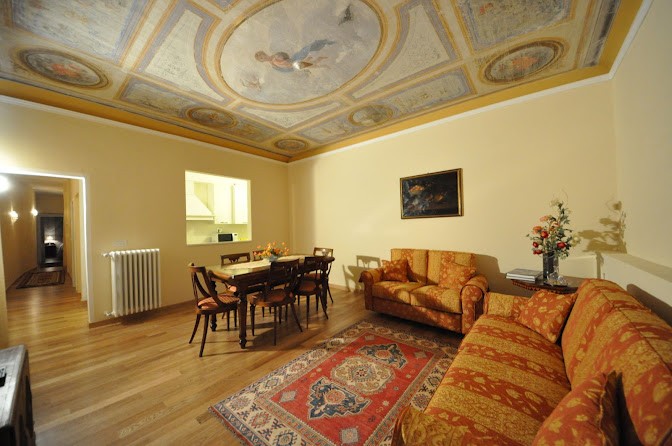
Florence - RIF. S236
This luxury holiday apartment near the Cathedral in Florence is located in the historic centre of town. The flat has recently been renovated maintaining the traditional style, with a special care for the recovery of the living-room’s fresco, and is furnished with both modern and antique furniture to offer a comfortable accommodation. The apartment, 100 sq m, is on the second floor of a building without lift. It consists of a living room with double sofa bed and dining area, a fully equipped kitchen, two double bedrooms (one has an en-suite toilette), one single bedroom and two bathrooms fitted with showers. Facilities include air conditioning in all the rooms, Sat-TV and internet connection.
This lovely apartment for rent in Florence is within walking distance of the Cathedral Square, the Accademia Gallery, Ponte Vecchio, the Uffizi Gallery, Palazzo Vecchio and other main attractions.
[Continues..]
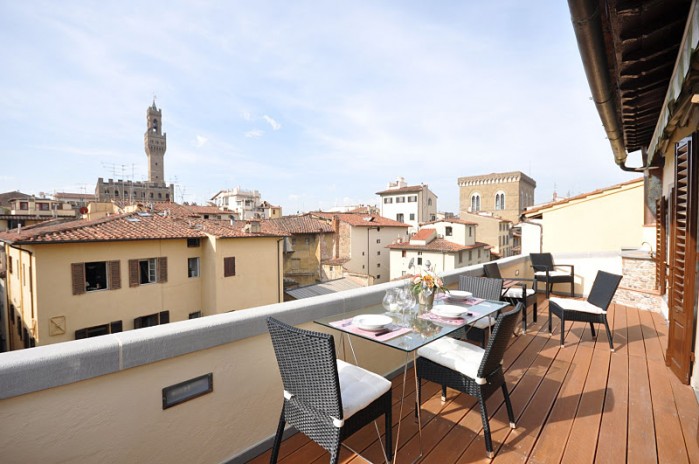
Florence - RIF. S207
This holiday apartment in Florence is located in an old building in Via Dante Alighieri, right in the medieval area of the historic centre. On the fifth floor, 90 steps and no lifts, the flat has a large private terrace (18sqm) with a breathtaking panoramic view. The accommodation can comfortably accommodate 2 people and consists of a fully equipped small kitchen corner with dining area, a living room, a double bedroom (double sofa bed, comfortable) and a bathroom with shower. Among the facilities also a Wi-Fi internet connection.
Close to Palazzo Vecchio (170 mt away), the Cathedral (300 mt), the Dante Museum, Bargello and the Uffizi museums (300 mt), the famous Ponte Vecchio (500 mt), this holiday accommodation in Florence is also surrounded by small alleys hosting antique shops, restaurants, pizzerias, wine-bars for all tastes. The day can start off with breakfast on the panoramic terrace and conclude with a romantic dinner enjoying the sun set over one of the most famous towns in the world with a good glass of Chianti.
[Continues..]
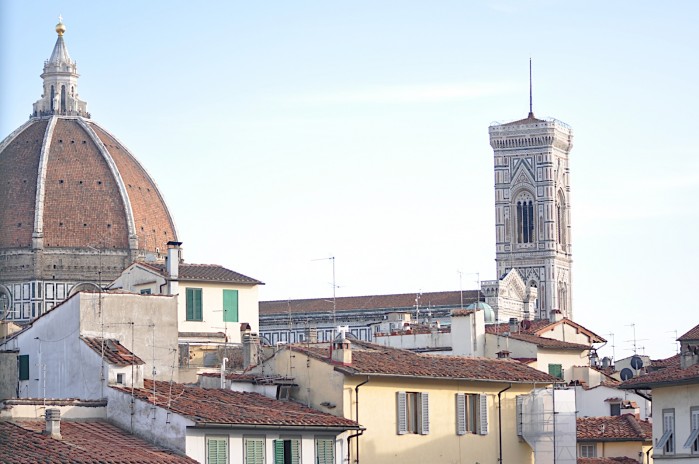
Florence - RIF. S250
This charming apartment for rent in Florence is located in a typical Florentine building, just a few steps from the Cathedral and the famous Church of San Lorenzo and the Medici Chapel. Situated on the third floor (no lift available), the flat is equipped with all comforts and has a magnificent view over the Cathedral and the Giotto bell tower from the living room. The apartment, 70 sqm, consists of a living/dining room with double divan bed, a fully furnished kitchen, a double bedroom with en-suite bathroom fitted out with shower, another double bedroom and a bathroom fitted out with shower. Also at guests’ disposal Wi-Fi internet connection, Sat-TV and air conditioning.
Owing to its central position, this accommodation in Florence is within walking distance of all major monuments and museums, as well as close to the main railway station, Santa Maria Novella. Here guests will live in the heart of the city, surrounded by the street market, shops and the typical ‘trattorie’, in close contact with the Florence’s daily life.
[Continues..]
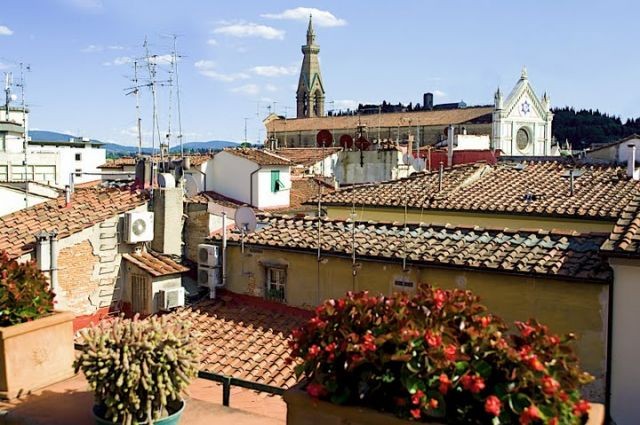
Florence - RIF. S174
This nice, comfortable rental apartment in Florence is situated in the historical centre of town (in a restricted traffic area), only 150 meters from the Cathedral Square. The apartment is located on the 2nd floor (with lift) of an historical building. Furnished with antique and modern furniture, the flat consists of a small kitchen, a living room with single divan bed and eating area, 1 double bedroom and 1 bathroom with shower. A beautiful roof terrace of 44 sqm offers guests a breathtaking view of Santa Croce Church.
Within walking distance of the Accademia Gallery, the Uffizi Gallery, Ponte Vecchio and Piazza Signoria makes this an ideal accommodation in Florence.
[Continues..]
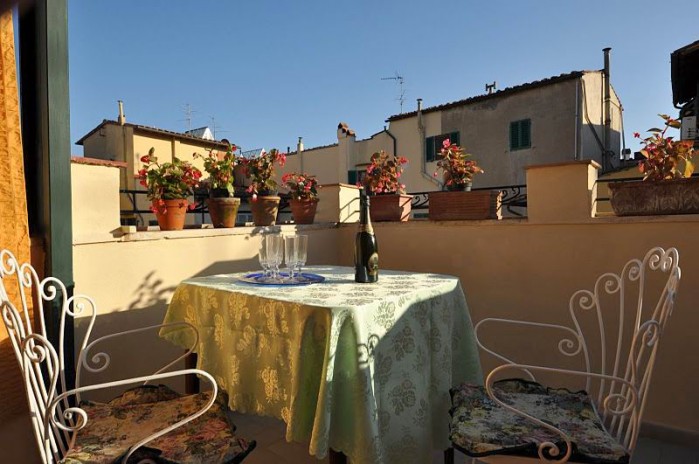
Florence - RIF. S218
This comfortable accommodation in Florence is a flat located in the historic centre of town right near the Cathedral and Santa Croce Square and the food market of Sant’Ambrogio within a pedestrian precinct. The apartment is on the fourth floor of a typical Florentine building, without lift, and consists of a living room with dining area, a fully equipped kitchen with dining area, a double bedroom, a single bedroom, a bathroom with shower and a lovely large terrace furnished for alfresco dining.
This apartment for rent in Florence is in an ideal position for visiting the sights on foot as well as enjoy shopping or stopping to savour some typical Tuscan dishes in some of the trattorie on the way.
[Continues..]
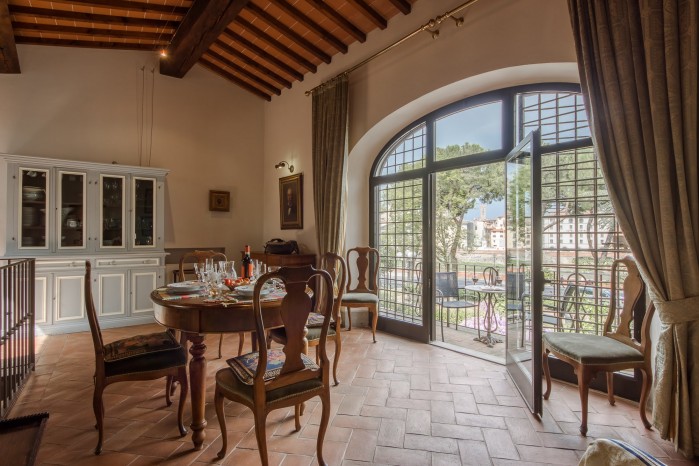
Florence - RIF. S336
Exclusive and elegant apartment positioned in the town centre of Florence, along the Lungarno Torrigiani, a beautiful location on the river Arno. This is the Oltrarno district full of shops, restaurants, craft shops, graceful Renaissance buildings and much more.
This large and elegant accommodation of 150 sq m can comfortably accommodate up to 4 people. It’s an independent, semi-detached house with a furnished garden, panoramic terrace and with a view over the Lungarno and the tower of Palazzo Vecchio. On two floors, access is via a short staircase (7 steps). On the ground floor there are 2 double bedrooms, 2 bathrooms with shower, a large living room with TV, radio-CD player, and a studio. On the first floor there is a dining room, with access to the lovely terrace overlooking the garden, the river Arno and enjoying wonderful views over Florence’s monuments, a fully equipped kitchen (fridge with freezer, oven, dishwasher, coffee machine, toaster, blender), a studio with a sofa bed, a bathroom with shower. Facilities: internet Wi-Fi connection, hairdryer, washing machine, iron and ironing board, heating system. Nearby there is also a paid parking garage (200 m away, direct reservation with the parking personal).
This holiday apartment is situated within walking distance from all the main attractions in town, such as Ponte Vecchio and Palazzo Pitti, 300 m away, the Uffizi Gallery 550 m, Palazzo Vecchio 700 m away, and the train station at 1.6 km. Not to be missed nea
[Continues..]
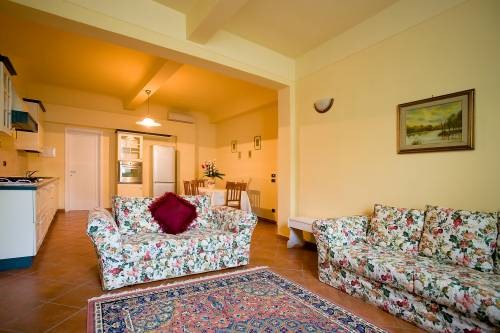
Florence - RIF. S125
This accommodation in Florence is situated on the 1st floor (no lift available) of a historic building facing San Firenze square, next to the Bargello Palace site of the famous museum. This flat is large (110 square meters), was renovated in 2008 and has been furnished with excellent taste. It consists of 2 double bedrooms, 1 room with twin beds, 2 bathrooms (1 with bathtub and 1 with shower), a large living room with double divan bed, a fully equipped kitchen (4 gas fires, electric oven, fridge with freezer, dishwasher, washing machine), and a laundry room. Facilities: wireless internet connection, air conditioning, heating, satellite TV.
This holiday apartment in Florence is strategically positioned to visit the town on foot: within 3-5 minutes walking distance, in fact, are Piazza della Signoria, the Uffizi Gallery, Ponte Vecchio, Santa Croce, the Cathedral and Giotto’s Bell Tower. The small alleys surrounding the area host many typical “Trattorie” (restaurants) and handicraft workshops.
[Continues..]
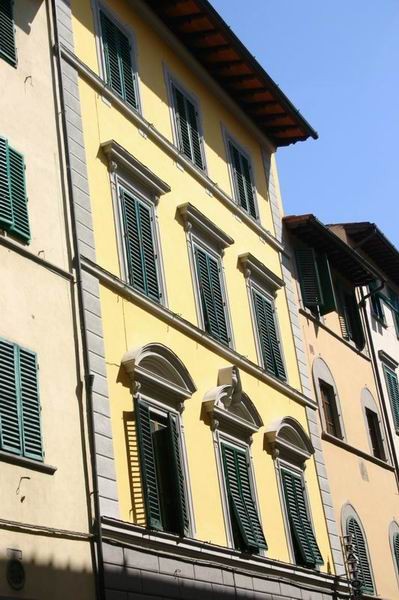
Florence - RIF. S215
This lovely apartment for rent in Florence is located in the quarter of Santo Spirito, one of the oldest and certainly liveliest of the town centre. On the ground floor of a nineteenth century building, this charming flat has recently been tastefully renovated and has its own private access from the inner courtyard of the building. The apartment consists of a large living room with eating area, a kitchen with larder, a toilet, two double bedrooms and a bathroom with shower. The inner courtyard also has a table with a couple of chairs.
This holiday apartment in Florence is within walking distance of most sights, such as Ponte Vecchio, the Santa Maria del Fiore Duomo, Giotto’s bell tower, Piazza della Signoria and the Uffizi Gallery, as well as near the wonderful fashion shops of Via Tornabuoni and Via della Vigna.
[Continues..]
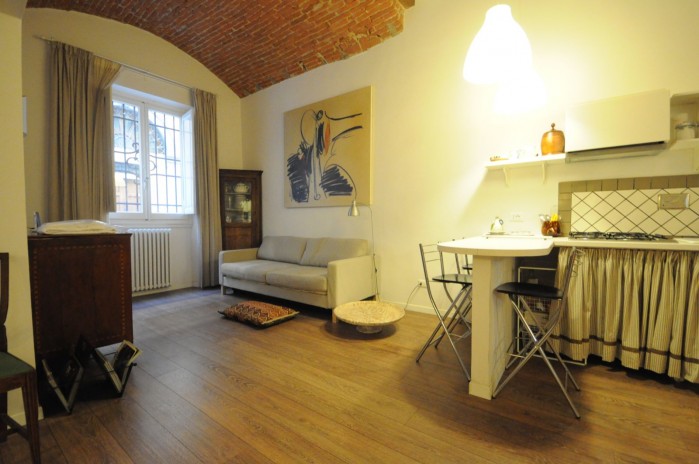
Florence - RIF. S265
This lovely one-bedroom holiday apartment in Florence is in the centre of town, near the Church of Santa Croce (250mt). The flat, 60 sq m, can comfortably accommodate 2 people and is on the ground floor. The apartment, on two floors, consists of a nice living room with sofa and television and fully equipped kitchenette on the ground floor with air conditioning. A wooden staircase leads to the double bedroom and two bathrooms, one fitted with bathtub and the other with shower.
The holiday flat is in a lively neighbourhood full of shops, craftsmen’s studios, trattorie and restaurants at just a few metres from main sights such as the Cathedral (400 meters) and Piazza della Signoria (350 meters), or the Uffizi and Pontevecchio (450 meters). With a 10 minute walk one can reach the Sant’Ambrogio street market, open every day except Sunday, as well as the antiques market in Piazza dei Ciompi. Florence’s main train station, Santa Maria Novella, is at just 15 minutes on foot (1200 meters away). The flat is in a restricted parking zone; however, those coming by car have plenty of pay parking garages in the vicinities.
[Continues..]
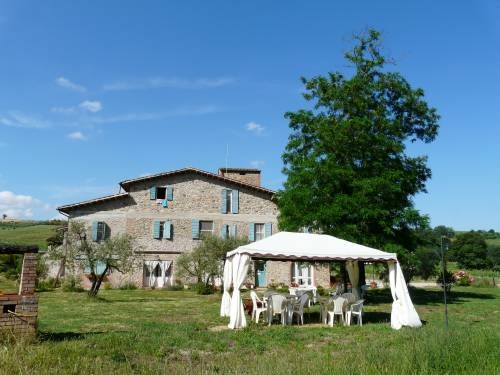
Gambassi Terme - RIF. S58
This holiday accommodation in Chianti is located in the heart of Tuscany near Gambassi Terme, a medieval village at only 11 kilometres from San Gimignano, famous for its thermal baths. Originally dating back to the 14th century, this amazing old house with tower has been converted into a Bed and Breakfast. Available are 6 bedrooms plus 1 suite situated in the tower. On the ground floor is a room for disabled people. All the beautiful large bedrooms on the 1st and 2nd floor have a view over the garden. The suite is on the 2nd floor and is divided onto two levels. A living room is on the lower level, whereas on the upper level is the bedroom and bathroom with Jacuzzi. Also available an internet connection in all rooms, beautiful garden with swimming pool and excellent restaurant where delicious Tuscan food is served. One can enjoy the beautiful Tuscan countryside surroundings by biking around the hills or trekking on the various paths. Ideal position for cultural excursions to art centres such as Volterra, Siena, Pisa, Florence or Lucca, most with an hour drive.
[Continues..]
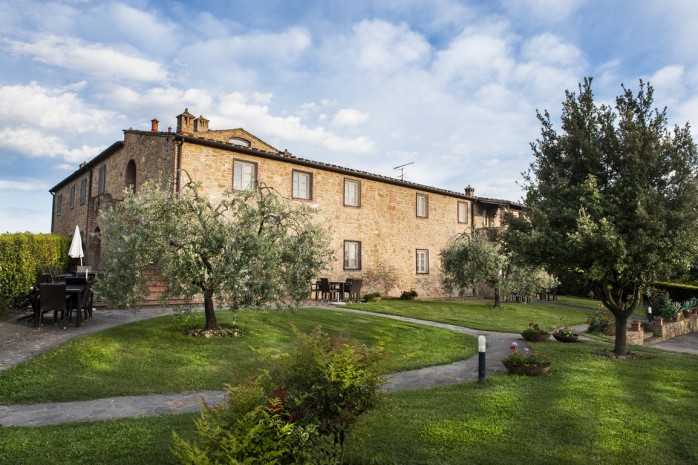
Montaione - RIF. S18
Sheltered in the middle of a valley of vineyards and olive groves, from which high quality olive oil and wine is made, these holiday homes are situated in a very quiet area, far from the noises of the towns and surrounded by an uncontaminated countryside.
This residence is composed by 2 houses, and it has 14 self-catering apartments, comfortably furnished in the Tuscan style.
This child friendly farmhouse is surrounded by a large park full of flowers and with green lawns where a gazebo offers shelters for meals.
Available is also a swimming pool (12x6 mt, from 110 to 220 cm deep) and a children swimming pool (6x4 mt, 60 cm deep), both open from Easter to middle October, set in a location with a breath-taking view, a laundry room, a large meeting room, barbecue, table tennis, bowls and children playground. Internet wi fi in the common area at the reception.
In the heart of Tuscany, this accommodation is in an ideal position for visiting art centres such as Florence and Pisa (50 km), San Gimignano (20 km), Volterra (30 km) and Siena (55 km). Nearest shops in Montaione at 4 km. A restaurant and a tennis court are only 1 km away.
[Continues..]
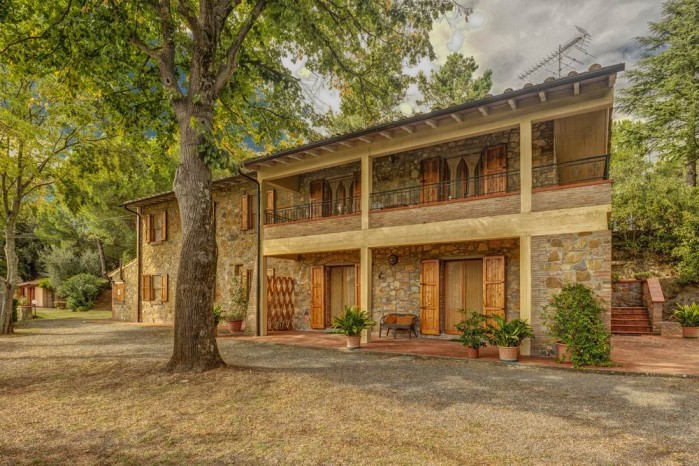
Montaione - RIF. S240
These holiday homes in Chianti are located near the medieval village of Montaione, right within the heart of the Tuscan triangle created by Florence, Pisa and Siena. Situated on the hills, the apartments enjoy a breathtaking view over the valleys, Val d’Elsa and Val d’Era, with their beautiful countryside slowly receding down towards the sea line. From the top of the hill guests can admire romantic sunsets. The holiday homes consist of 5 apartments of different size and typology; 3 are in the main building whereas the other 2 are in independent houses. The accommodations are immersed in the surrounding nature of the 5 hectares of estate with its olive groves, pine trees and a beautiful botanical garden full of plants and flowers, ideal for walking and for those wanting to remain in contact with nature, its scents and colours. Swimming pool, 10x5 mt, open May-Oct, up to 2,30 mt deep: the ground is fenced for children security. Possibility of olive oil tasting on the property. Children playground available, table tennis, as well as internet wi fi connection. Washing machine.
These holiday apartments in Montaione are near shops, restaurants and other facilities as well as in an ideal position for visiting art centres such as Florence, Siena, Pisa, Lucca, San Gimignano and Volterra.
[Continues..]
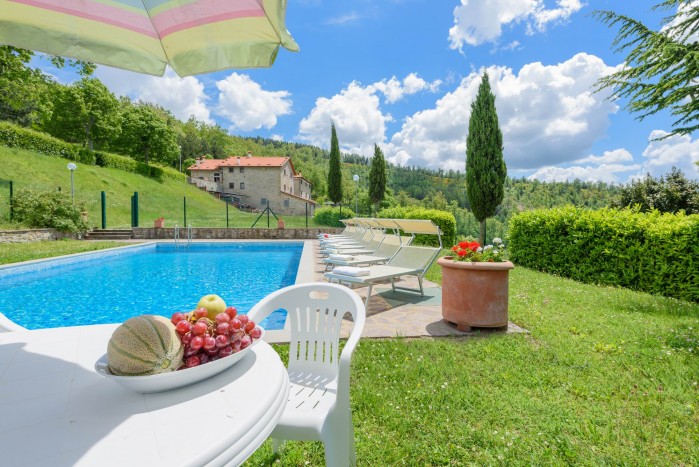
Londa - RIF. S74
Built in the 1600s by a noble Florentine family as a holiday home, this large villa with pool in Tuscany is located in Northern Tuscany at 750 m above sea level with a breathtaking view over the valley of Mugello and overlooked by Mount Falterona. Florence is 45 km away and the nearest shops and supermarket are in Londa at 7 km. This area has been for centuries the rural expansion of Florence, influenced by its history and by the House of Medici who, originally came from here and had many palaces and villas built, among which the Villa of Cafaggiolo where Lorenzo il Magnifico often sought refuge from the political worries of Renaissance Florence.
The villa and the two farmhouses for rent have been totally renovated into 5 self-catering apartments for rent. The structure can accommodate up to 17 guests and has a swimming pool, a barbecue and a washing machine. A relaxing setting surrounded by woods of oak and chestnut trees, perfect for a restful holiday, far from the madding crowd.
internet wi fi available in the apartments up to the swimming pool area.
[Continues..]
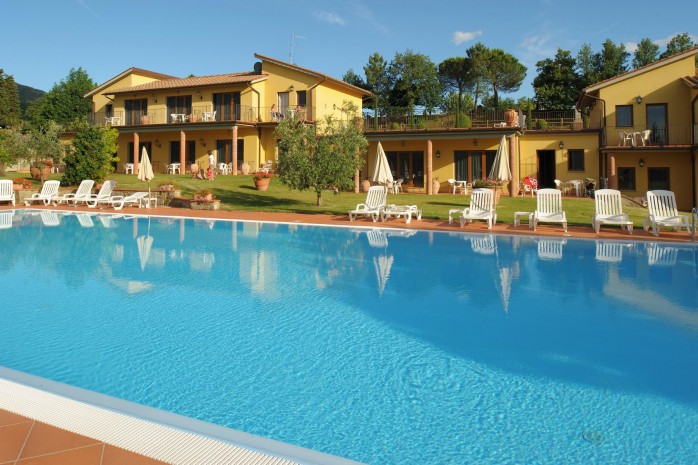
Reggello - RIF. S325
Marvellous wine estate located in the Chianti at just 35 km from Florence. It enjoys a wonderful sunny position with a stunning view over the valley and the surrounding landscape. A special mention is due to the landscape at sunset.
It is a perfect location for a relaxing holiday or for visiting Tuscany.
The property consists of 43 comfortable apartments as well as various facilities for guests. These include a large garden, a swimming pool (ca. 20x8, open from April to October), a children’s pool, barbecue, horse-riding, tennis court, children playground, table tennis, bowls, billiards, a meeting room, safe, laundry room, bicycles, wine and olive oil tasting, as well as a restaurant. Internet Wi-Fi covering a large part of the grounds.
Apartments of various sizes, nicely furnished in the typical Tuscan style maintaining the original features of the building, including wooden beam ceilings, located on the ground, first or second floor.
Nearest food shop in San Donato village, within walking distance (7 minutes - 600 m). The Mall outlet at 10 km, Reggello 5 km, Arezzo 60 km, Siena 70 km.
[Continues..]
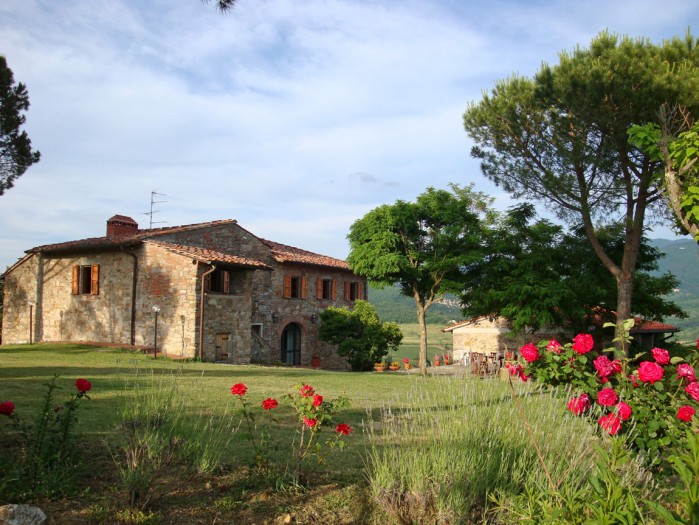
Rignano sull'Arno - RIF. S51
Surrounded by the Chianti countryside, southeast of Florence, these holiday homes in Tuscany were originally built in the 18th century as a hermitage and place of prayer. This beautiful stone holiday farmhouse and other proprieties were later bought by Baron Sonnino and converted into the Casolari farmstead. Bought by the present owner in 1975 the buildings were restored into a villa, a cozy self-catering apartment below the villa and a lovely barn that is an independent house from the villa. Each accommodation has its own private entrance and terrace. The whole structure can comfortably accommodate 13 people and a small swimming pool (8x5m, open May-Sept) with a wonderful view is also available. The farmhouse is surrounded by olive groves, vineyards and a private lawn, in perfect isolation far from the madding crowd, and from the terraces one can also enjoy a breathtaking view over the Arno valley and the famous forest of Vallombrosa. These accommodations in Chianti are in a perfect position for visiting the famous art centres of Florence (30 km), Arezzo (60km), Siena and Pisa.
Nearest shops and restaurants: 2 km in Rosano village.
At guest’s disposal internet wi fi connection, washing machine, bycicles, cooking class (on req)
[Continues..]
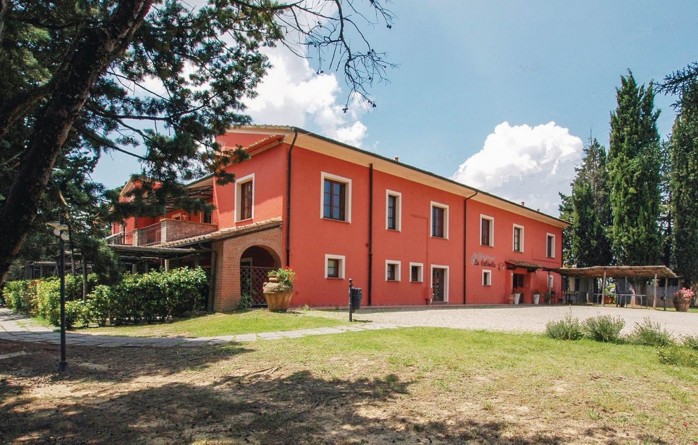
Montaione - RIF. S47
This beautiful holiday accommodation in Chianti is located near the medieval village of Montaione, in the heart of Tuscany, right between Florence, Pisa and Siena (all at 50-55 km), at only 19 km from San Gimignano, 17km from Certaldo and 29 km from Volterra. Lucca is 60 km away. This lovely farm, originally dating back to 1861, but restored during the years, consists of a Tuscan style villa and other 3 independent buildings. The apartments (mostly on the ground floor, but some of them on the first floor) have all a private terrace or sitting area, and are very comfortable and have been wisely renovated in respect of environment and of clients’ needs.
Also available to guests are a large veranda, with a beautiful view, a wood-burning oven and a fireplace, where one can spend pleasant hours, and two swimming pools (one for adults 18x9m and one for children 6x3m, open Apr-Oct) with a spacious solarium furnished with deck chairs, sun beds and beach umbrellas. The farmhouse is surrounded by a marvellous park full of pine trees and cypresses, where birds sing all day long. It is also possible to meet pheasants and wild ducks while walking around the estate as well as the two graceful swans that inhabit a lake nearby. Pets are welcome. Also available to guests: Internet Wi-Fi connection, children playground, breakfast room and washing machine. Nearest shops and restaurants in Montaione at 3 km.
[Continues..]
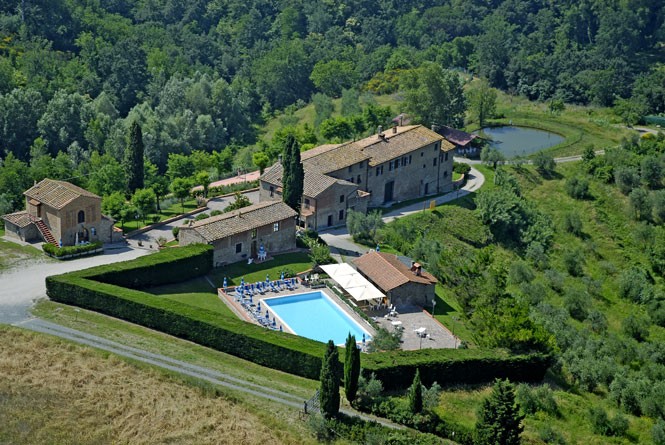
Montaione - RIF. S227
These holiday apartments in Chianti are located near the medieval village of Montaione, right within the heart of the Tuscan triangle created by Florence, Pisa and Siena. This lovely 13th century farm estate has been restored maintaining the traditional Tuscan characteristics with terracotta tile flooring and pietra serena staircases. The accommodations consist in three buildings with a total of 8 comfortable apartments, each with independent entrance and private outdoor area. Surrounded by olive trees, oleanders and a hedge of cypresses is the swimming pool (18x9m, open May-Oct) equipped with deckchairs and garden parasols. An Italian breakfast, included in the price, is offered in the small building opposite the swimming pool). With a wood-burning oven, cloakrooms and a small library, this common area is also used for wine tasting on request. Additional amenities are a combination playground structure for children, a table tennis table, a tennis court, illuminated for also night games, and a bocce court, as well as a washing machine, barbecue and Internet connection available by the swimming pool.
Surrounded by olive groves and vineyards, these holiday homes in Tuscany are in an ideal position for visiting the most important art centres of Tuscany. Distances: Florence, Pisa and Siena (all at 50-55 km), San Gimignano at only 19 km, Certaldo 17km, Volterra 29 km. Lucca is 60 km away. Nearest shops and restaurants in Montaione at 3km.
[Continues..]
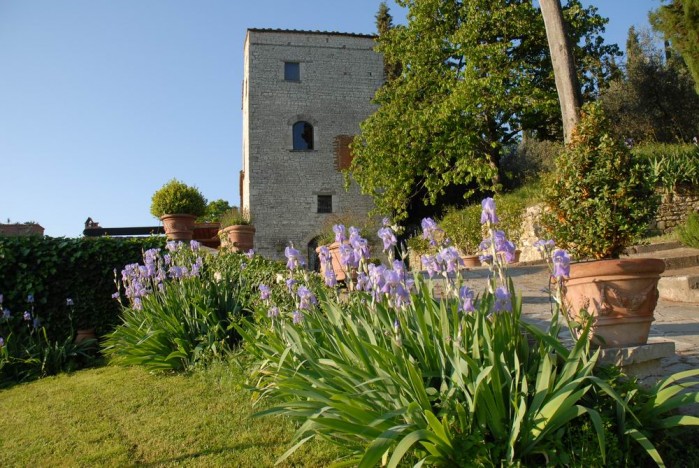
Rignano sull'Arno - RIF. S67
This incredible holiday home in Chianti is located on the hills just south of Florence, facing the Arno valley and the Pratomagno mountain range. It consists in a medieval hamlet built around an original 12th-century tower house. The tower house was restored between the 15th and 16th century assuming its current aspect. The buildings are divided into 4 apartments of which one is used by the owners. The three self-catering holiday flats are very comfortable and furnished with period furniture. Originally the ceilings of the tower were decorated with frescoes, today traces can be found on a panel in the flat on the first floor. In the accommodations there are reference books on Renaissance art and on Florence and Tuscany. There is no swimming pool. Pets accepted. On request the owner is available for cooking lessons on Tuscan and medieval dishes. It is also possible to organize a dinner with the owner.
Outdoors guests can relax in the garden, under the shade of age-old olive trees and among the irises and roses, or on the scenic terrace furnished with deckchairs, chairs and tables right in front of the house. On the premises it is also possible to visit the medieval garden created with the intention of recreating the architectural and allegorical features typical of the ‘hortus conclusus’, enclosed garden, of 13th & 14th-centuries country noble residences. Surrounded by olive groves and woods, the building is part of a farm estate, whose main products are an excelle
[Continues..]
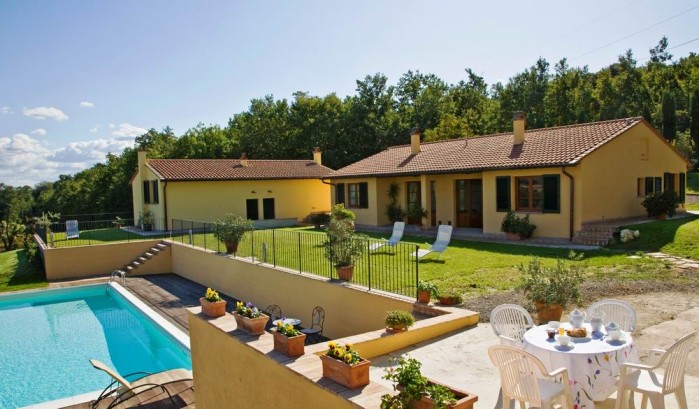
Gambassi Terme - RIF. S310
Surrounded by the breathtaking Tuscan countryside, this country house offers an unforgettable holiday in the heart of Tuscany, only 12 Km from San Gimignano, 35km from Volterra, 45 km from Florence and Siena. The amazing medieval town of Certaldo (Boccaccio’s hometown) is only 2,6 km away. It’s also worth to visit Monteriggioni, the spectacular walled village near Siena. The nearest village is Badia Cerreto, and at 1,2 km there is a food shop, whereas at 2 km there are a restaurant as well as a tennis court and a horse riding centre.
The holiday home is immersed in 20 hectares of woodland, crossed by paths where you can walk or cycle in contact with nature and in total peace and quiet. You will probably meet some deer, pheasants and also some hawks. From the swimming pool (12x6 m, open from May to October) at the farmhouse, as well as from the property, you can enjoy a stunning view over Certaldo Alto. At guest’s disposal also a washing machine, internet Wi-Fi, barbecue area.
The farmhouse offers 3 comfortable apartments, in Tuscan style furnished, each with 2 bedrooms and 2 bathrooms.
[Continues..]
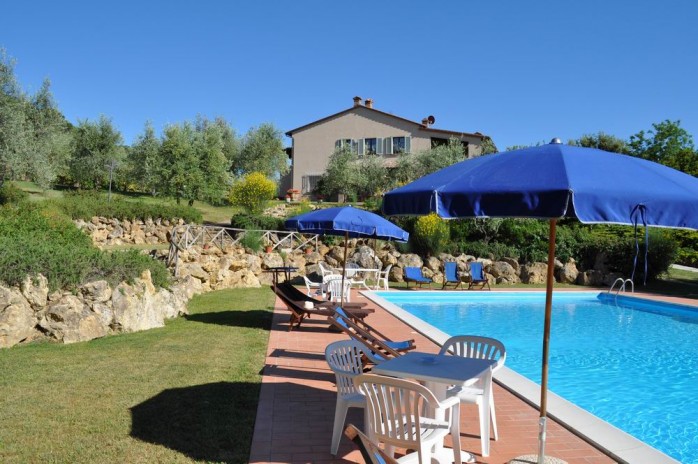
Iano - RIF. S24
This holiday home in Chianti is in a estate producing olive oil located in the heart of Tuscany, at just a few km from Volterra (20Km) and San Gimignano (19km). The farmhouse has been totally renovated in respect of the modern country style with elegant furnishings. The accommodation consists of 4 spacious self-catering apartments, very comfortable and bright; two are on the ground floor with private patio/veranda and two are on the first floor with private terrace. All flats are furnished in very good taste and can accommodate up to a total of 24 people. A swimming pool (16x8m, open Apr-Oct) surrounded by olive trees is available for guests. Pets welcome.
The area around the farmhouse is full of historic and cultural sites as well as beautiful landscapes represented during the centuries by famous painters. There are also various good restaurants were to relish the typical Tuscan dishes. Many art centres are at approximately 50 km, such as Florence, Pisa and Siena. These apartments for rent in Tuscany are in the perfect location for a comfortable and relaxing vacation in an elegant flat with the possibility of occasional excursions
[Continues..]
Montespertoli - RIF. S82
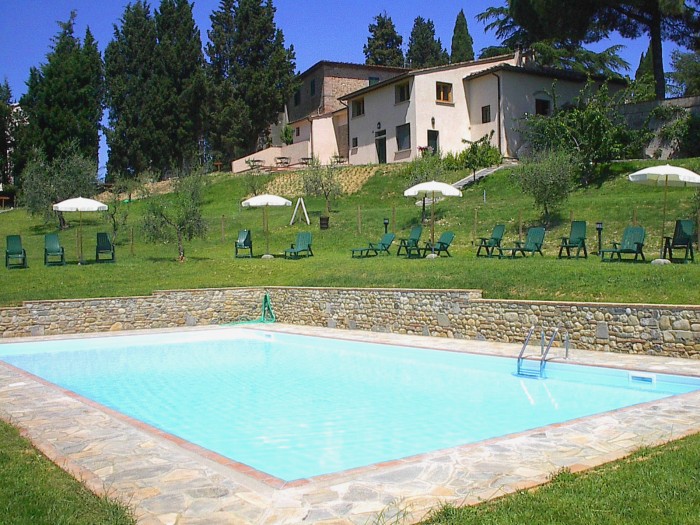
This holiday home in Chianti dominates a beautiful landscape of vineyards, olive groves, cornfields and cypress forests typical of Tuscany and especially the Florentine hillsides of Montespertoli.
The 15th-century farmhouse covers a property of 500 hectares and produces 6 different varieties of wine as well as extra-virgin olive oil, sunflower and wheat. For this reason this holiday accommodation for rent concentrates all in one the characteristics of the Tuscan countryside, offering an ideal situation for a totally relaxing holiday.
This holiday farmstead consists of 16 self-catering apartments distributed in several old barns and restored cottages. 2 flats are in the farmhouse next to the swimming pool (14x7, open May-Oct), 10 are in a tiny hamlet, near the restaurant, at 500 meters from the swimming pool. Other 4 apartments are in another farmhouse at 200 meters from the restaurant and swimming pool. The apartments are finely furnished with particular care to guests’comfort.
The farmhouse organizes wine tasting tours as well as a visit to the cellar. Pets are welcome. On the estate guests will also find a small vintage car museum. The beautiful Tuscan countryside surrounding the farm was chosen by the Taviani brothers to shoot their movie “The Night of the Shooting Stars”.
The location of these holiday apartments in Tuscany is perfect also for visiting most of the art centres such as Florence, Pisa, Lucca, Siena, San Gimignano and Volterra. At guest’s
[Continues..]
San Donato in Poggio - RIF. S85
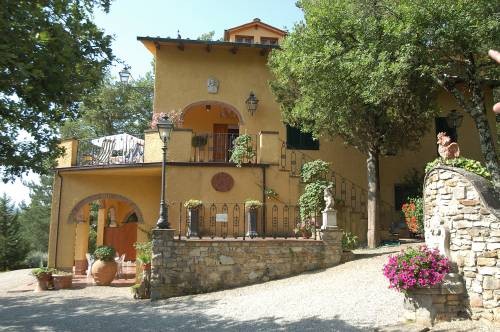
This holiday home in Tuscany is at 1 km from the medieval village of San Donato in Poggio, in the heart of Chianti Classico, famous for its wonderfully preserved castle, towers and churches. The holiday accommodations consist of a group of charming Tuscan villas divided up into flats on a hill surrounded by vineyards, olive groves and oak trees and with a breathtaking view over the Chianti hills and the Natural Park of the Pesa River. The estate extends itself in a 10000 sqm park with tennis court, swimming pool (size 15x8 m, open May-Oct), solarium, veranda and night-time illumination.
The self-catering apartments come in various sizes, each with an independent entrance and terrace or equipped garden, and are elegantly furnished and provided with heating and modern comforts, internet Wi fi and Sat tv. Located between Florence (30km) and Siena (38km), these holiday apartments in Chianti are absolutely peaceful and relaxing, and exemplifies the typical Tuscan retreat which offers both a withdrawn or an active holiday. It’s worth a visit to San Gimignano 25km and Certaldo 27km, easy to reach. At guest’s disposal Wi-Fi internet connection which covers all the ground, Tennis court, washing machine, barbecue.
[Continues..]
Grassina - RIF. S87
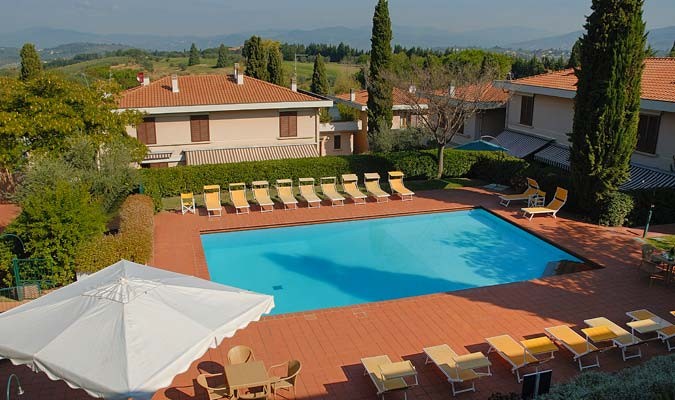
This enchanting holiday home in Chianti is surrounded by the typical green hills of this area and is located at only 11 km from Florence, facing the renowned Florence Golf Club Ugolino, founded by the English Florentine colony in 1889. Nearest shops and Restaurant are in Grassina 3km, a small medieval village at the foot of the hill. The residence consists of comfortable and elegant self-catering apartments for vacation rental with sunny living rooms, fully equipped kitchenette, terracotta tile flooring and terraces with panoramic views and independent entrances. Guest facilities are a swimming pool (13x8m, open May-Sept), a sauna and a technogym fitness room, free internet point and access at the reception (fees for connection in apartment), barbecue in the common garden, mountain bikes, table tennis, bowls, and playground. On request breakfast is available in the veranda. The residence can accommodate 80 people. Perfect starting point for delightful day trips with food and wine itineraries, these holiday apartments in Tuscany are at just a few km from the historic centre of Florence (bus connection) and its art treasures.
[Continues..]
Reggello - RIF. S385
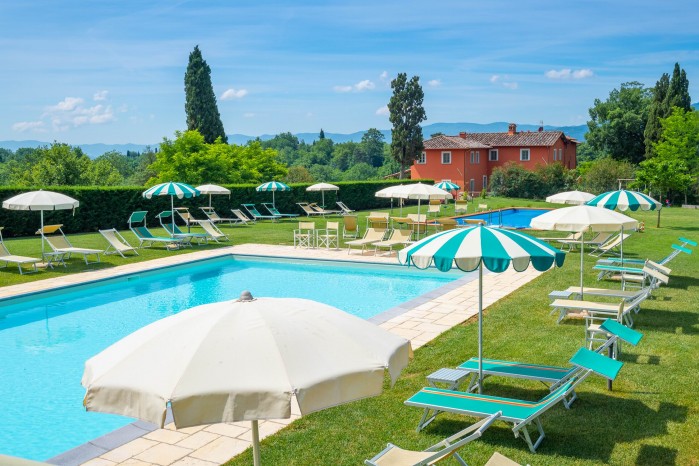
This beautiful estate is in the heart of the Florentine hills. Located between Reggello and Figline Valdarno, these holiday accommodations are set within 300 hectares (over 740 acres) of land consisting mostly of woods and farmland. It is also a game reserve so it will be easy to meet various species of wild animals such as hares, pheasants and roe deer.
The estate has various buildings comprising holiday flats scattered on the property. A large common pool area features two swimming pools (open from May to the middle of Oct, 16x8 m, 140 cm h with salt-water and 12x6 m, 60 cm h) surrounded by deck chairs, sunbeds, garden parasols, and a small children’s area with sandbox and swing. On top of one of the knolls, enjoying the view over the Tuscan hills, are 2 buildings, one hosting 4 self-catering flats, each with private entrance and outdoor space, and the other an independent accommodation. In the other direction there is an independent house with private garden and hot tub and another building with apartments. The flats are located at 150 m from the swimming pool area. All flats have a common laundry room and a large barbecue to share.
The estate is just 2km from the nearest restaurant and 3 km from the nearest village where you will find food shops. Other distances: 3 km from The Mall Firenze (Florence’s Luxury Outlet), 6 km from the beautiful Sammezzano Castle, 25 km from Greve in Chianti, 30 km from Florence, 50 km from Arezzo, 75 km from San Gimignano and 85 km from Si
[Continues..]
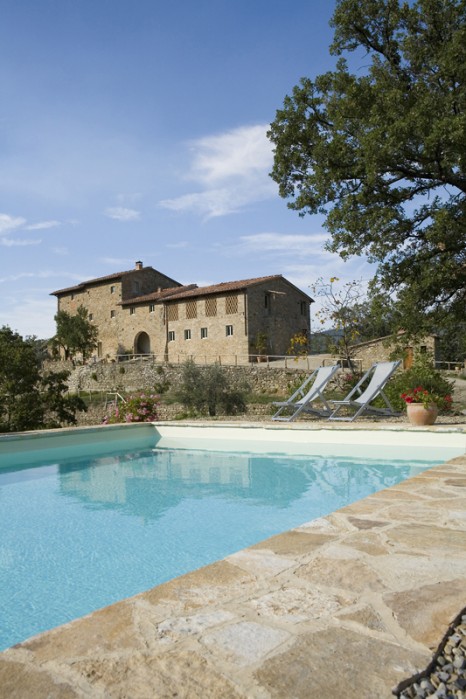
Borselli - RIF. S153
Tucked away in the Florentine hills just 28 km from the cultural centre of Florence, home to the renowned Medici family and birthplace of Renaissance art, this wonderful holiday home in Chianti is the perfect hideaway. The unique setting overlooking the most picturesque stretch of the Pomino and Rufina wine route is a splendid area for nature lovers, walkers and historians alike and for those in search of culture; the beautiful medieval cities of Siena, San Gimignano, Pisa, Lucca and Arezzo are within easy reach. Florence is only 30 Km distant.
Descending down a winding tree-lined lane you will be pleasantly surprised to find this charming 15th century rambling stone farmhouse, perched majestically above 20 acres of chestnut woods and olive groves, its beauty further enhanced by layers of stone terracing and our vine-covered pergola gives a shady retreat for outdoor dining. We offer a selection of self-catering apartments for 2 to 6 people within the farmhouse, lovingly restored in keeping with local traditions.
After lazy days relaxing by the swimming pool (13x6m, open May-Oct)or in the secluded gardens, take time out to explore the surrounding countryside, on foot or for the more adventurous on horseback or mountain bike. Enjoy an aperitif in the cool of “La Limonaia” or just soak up the atmosphere of our very own olive press where local olive oil, wine and other products are available or for those cooler evenings curl up with a good book and the inevitable glass o
[Continues..]
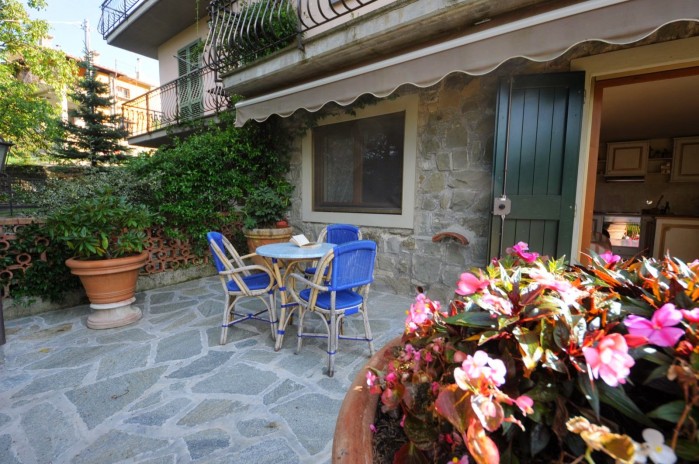
San Godenzo - RIF. S283
This lovely holiday home in Mugello is located in the medieval hamlet of Casale, in the commune of San Godenzo (at 4 km with shops and restaurants). In the heart of the Tuscan Apennines, surrounded by nature and its magnificent forests, the tiny village enjoys a breathtaking view over the valley. The apartment is on two levels and can comfortably accommodate up to 6 people (85 sqm). Access is via an independent entrance on the ground floor where there is a living room, 2 double bedrooms and a bathroom fitted out with shower. 10 steps lead down to a lower level where there is a fully equipped kitchen (fridge, oven, microwave oven, coffee machine, toaster, dishwasher and washing machine) with a dining area, a double bedroom and a bathroom fitted out with shower. From this floor a door leads out into a gorgeous private garden with barbecue and heated Jacuzzi tub (3x3 m, 90 cm deep, 4 seats or 2 comfortable loungers) with an incredibly scenic view. The grounds also have a private car park for just one car, otherwise, at 200 m there is a public car park for more.
This cosy holiday flat in Tuscany is in an ideal position for both a relaxing and cultural vacation. Florence is at 45 km and nearby San Godenzo, founded in 1028, has much to offer visitors, such as the old Benedictine abbey. Close at hand is also the stunning National Park of the Casentino Forests and Monte Falterona where one can take long walks or go horseback riding.
[Continues..]
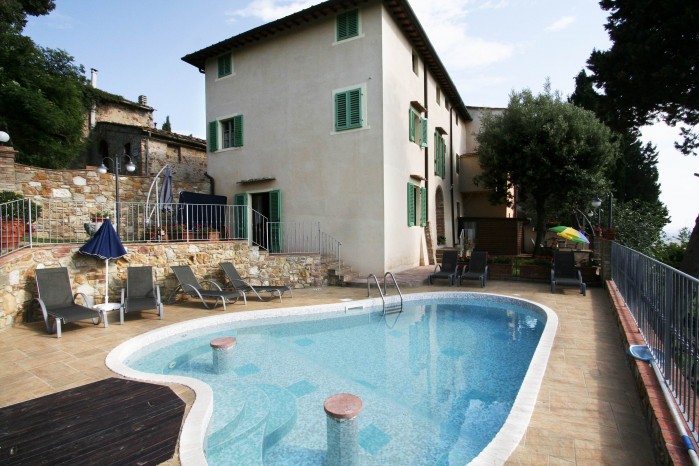
Montaione - RIF. S412
This charming villa in Chianti with a swimming pool is set within a hamlet less than 2 km from the village of Iano, right in the heart of Tuscany, between Volterra and San Gimignano.
Encircled by the beautiful rolling hills of Tuscany, the exclusive pool enjoys sweeping views over the surrounding countryside. Open from the beginning of May to the end of October, it is 1.30 m deep with hydromassage.
The 210 sq m villa is spacious, comfortable, and tastefully furnished. It consists of 9 rooms on three levels. On the ground floor, there is a large living room with a decorative fireplace and flat-screen TV, dining area and access to the garden and swimming pool; a fully equipped kitchen (fridge-freezer, gas stove, oven, dishwasher, microwave oven, espresso coffee machine, kettle, toaster), a double bedroom, a single bedroom (mattress width 80 cm) and a bathroom fitted with shower.
On the first floor, there is another fully equipped kitchen (fridge-freezer, gas stove, oven, dishwasher, microwave oven, espresso coffee machine, kettle, toaster) with a dining area and flat-screen TV, a double bedroom, a twin bedroom and a bathroom fitted with a shower.
On the second floor, there is a fully equipped kitchen (fridge-freezer, gas stove, oven, dishwasher, microwave oven, espresso coffee machine, kettle, toaster) with a dining area and flat-screen TV, a double bedroom, a twin bedroom and a bathroom fitted with a shower.
There are three furnished covered terraces and a patio, plus
[Continues..]
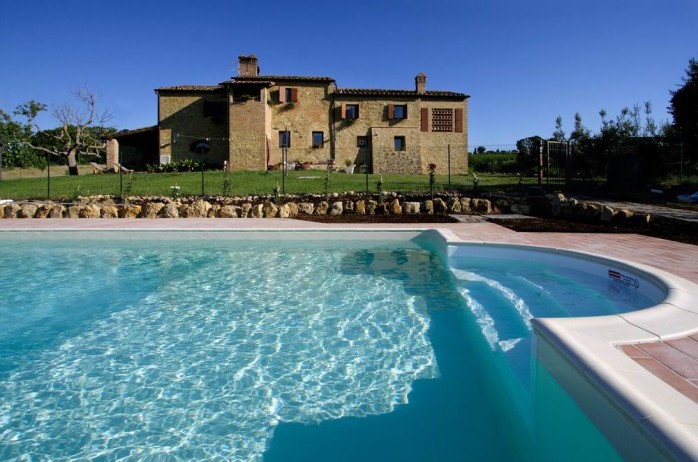
Gambassi Terme - RIF. S253
This lovely holiday villa in Tuscany is at only 18 km from medieval towered San Gimignano and 28 km from picturesque Volterra. Once an ancient farmhouse, today the building has been divided into two semi-detached houses, with the owners living in one in respect of guests’ privacy but always available for any possible requirements as well as offering their own wine and olive oil tastings. The holiday house is 120 sq mt and on two floors. On the ground floor there is a living room with sofa bed for one person, sat-TV and dining-area, a fully equipped kitchen, and a toilet with washing machine. On the first floor there is a double bedroom, another bedroom with three single beds (also possible a double bed plus a single) and a bathroom fitted out with shower. The bedrooms have air conditioning.
Also available internet connection. Outside there is a pretty garden fully equipped with outdoor furniture, an ivy covered porch, and a barbecue as well as a swimming pool (10x6 mt, from 1,20 to 1,80 mt deep) open from May to October.
This beautiful villa with swimming pool in Gambassi Terme is immersed in an idyllic landscape with a wonderful view. At only a km from the centre of the charming medieval village, the nearest restaurant is at ca. 500 mt. Shops in Gambassi 1 km. At only 7 km from Montaione, considered the heart of Tuscany, this holiday home is perfectly centred for visiting most art centres such Florence (49 km), Siena
(52 km), Pisa (60 km) and Lucca (65 km).
[Continues..]
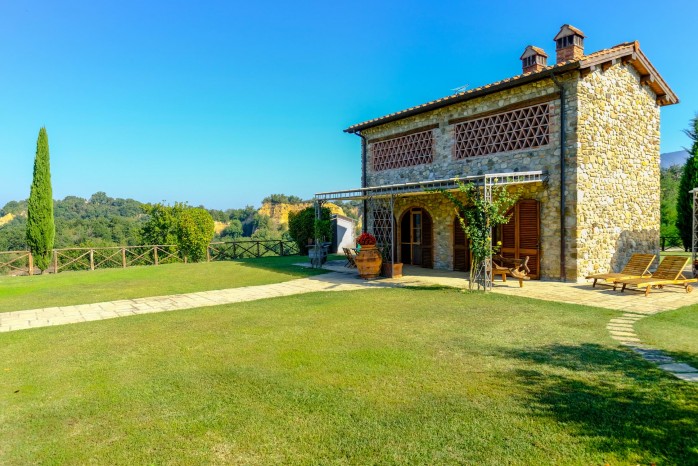
Reggello - RIF. S396
This charming, stone villa of 130 sq m sits on a knoll, in a beautiful area, surrounded by the breathtaking landscape of the Natural Area of the ‘Balze’ of the Valdarno, a backdrop of luxuriant countryside interrupted by pinnacles and ravines sculpted by time from the bare earth and rock. This is the territory Leonardo da Vinci depicted in his backgrounds, a spectacular land speckled with charming medieval hamlets and lush farmland.
Small, yet luxurious, this secluded country house is only for two and features an exclusive above-ground swimming pool (5,5 m x 2,8 m, depth 120 cm) and a private spa. Totally isolated in the greenery and peace of the Florentine Chianti countryside, the house is, however, conveniently close to a restaurant (at 3 km) and to the hamlet of Leccio (at 4 km) which has all first necessity shops.
Surrounded by 880 sq m of garden, with solarium and barbecue, the villa features a large veranda, perfect for al-fresco dining, and is split on three levels. On the ground floor, there is a fully equipped kitchen (oven, fridge with freezer, dishwasher, espresso coffee machine, American coffee machine, microwave, kettle, toaster, washing machine) with a dining area, a living room with decorative fireplace, Sat TV and a two-piece bathroom. In the basement, there is a private Spa with a Jacuzzi, a Turkish bath and a shower, whereas up on the first floor there is the double bedroom with an en-suite bathroom with bathtub and a hairdryer.
Amenities: Wi-Fi, air con
[Continues..]
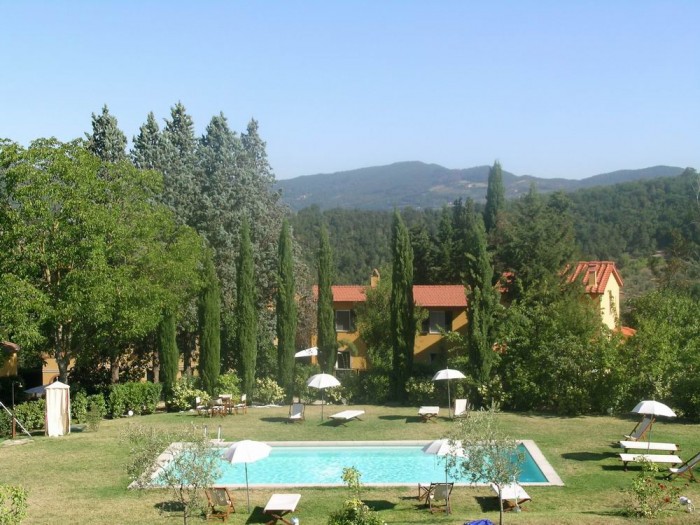
Rufina - RIF. S34
This villa with pool in Chianti is part of a farm estate located right in the heart of Tuscany’s Chianti wine area and enjoys a breathtaking view over the surrounding hills covered with olive groves, vineyards and woodland, at only 25 km south-east of Florence. Completely restored with antique and modern furniture, this self-catering villa can accommodate up 10 people. It is on three floors. On the ground floor is a large kitchen with washing machine, dishwasher, considered the second kitchen. Outside stairs lead up to the first floor where there is a large kitchen (dishwasher, oven, fridge) a very spacious living room with open fireplace, Sat-TV and CD player and stereo, a games room with pool table, a twin bedroom, a bathroom with shower/wc and a double bedroom with en-suite shower/washbasin (no Wc). On the second floor there is a large twin bedroom, a double bedroom, a bathroom with hydromassage shower and another twin bedroom which opens onto a big roof terrace with charming views over the countryside. Internet Wi Fi connection free of charge.
The villa has a private garden with barbecue and swimming pool (12x6, open May-Sept). Pets welcome.
This Chianti accommodation offers a relaxing holiday as well as the possibility of visiting most Tuscan art centres such as Florence, Pisa and Siena as well as many medieval villages in the surroundings. Also opportunity, in the neighborhoods, to savour the local wine (Chianti Pomino) and gastronomic dishes as well as discover the
[Continues..]
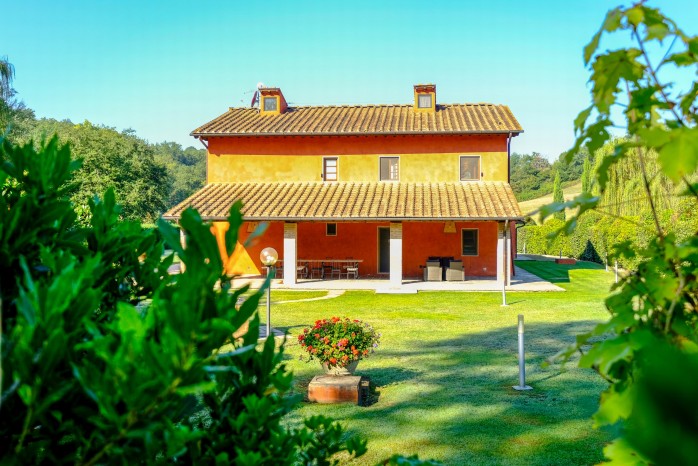
Reggello - RIF. S369
Spacious villa located in the heart of the Florentine Chianti, only 7 km away from Incisa Val Arno.
It is the land of Leonardo’s backgrounds in his paintings, a spectacular countryside enhanced with charming medieval hamlets and a picturesque landscape.
The villa is immersed in the greenery and peace that the Tuscan countryside is famous for.
At the same time, it is conveniently close to the town. At only 3 km is Leccio, which has all first necessity shops whilst at 10 km are the charming villages of Figline Valdarno and Reggello.
The villa is a typical Tuscan country house, a style whose roots go back to the simplicity of country living. Here your attention will be captured by its wooden and brick floors, wrought iron beds, large divans covered in earthen colours, vaulted ceilings and archways; all features which you will fall in love with.
The villa has a large garden with a saltwater swimming pool (10x5 m, depth cm 140), and a patio, next to the dining room, with a 16-seat table, as well as a barbecue, ideal for your “al fresco” dining.
The accommodation, which sleeps up to 16 guests, consists of a large villa of 265 sq m and an annex (the old lemon-house where the plants were recovered during the winter) of 75 sq m.
Main house ground floor: entrance, 16-seat dining room, living room with a fire place, Sat-TV, fully equipped kitchen (oven, fridge with freezer, dishwasher, espresso coffee machine, American coffee machine, microwave, kettle, toaster, blender, fr
[Continues..]
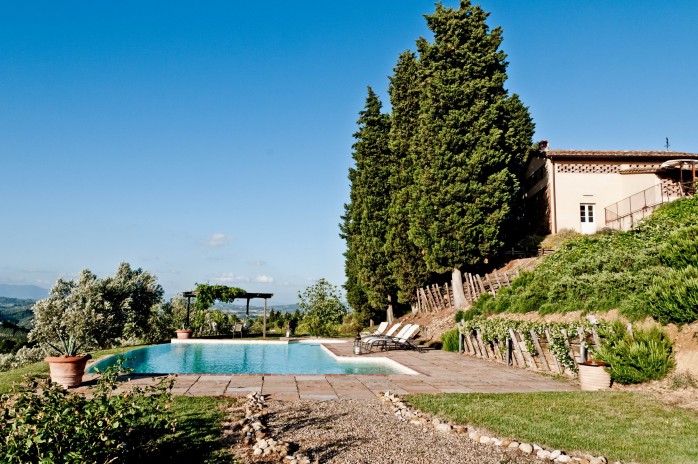
Montelupo fiorentino - RIF. S16
This charming holiday home is located in the countryside of Montelupo Fiorentino, right on the outskirts of Florence. Surrounded by olive trees and age-old cypress trees, this renovated barn enjoys, from its hilltop position, a 360° breathtaking view. This elegant and comfortable cottage has preserved its original architecture maintaining the local stone works, the wooden beam ceilings and the Florentine terracotta tile flooring.
Furnished in the typical Tuscan style, the house is dotted with exceptional objets d’art, such as fine paintings, ceramics coming from Montelupo and typical ornaments.
The cottage is on two floors and consists of a spacious, fully equipped kitchen, two double bedrooms with air conditioning and two bathrooms with shower on the ground floor. Upstairs there is an open-plan upper-gallery with a fireplace and a large sitting room, with two sofas (of which one a sofa bed for two people).
Facilities are Sat-TV, Wi-Fi connection, DVD player, CD player, safe. Outdoors there is a large, sunny veranda, fully equipped, where one can sunbathe or enjoy open-air meals. There is also an infinity swimming pool with Jacuzzi corner, 2 metres large, complete with pool deck furniture (11x7 metres, open from the middle of May to the end of September), from which you can enjoy a breathtaking view. The cottage has an alarm system and an automatic gate opener for the car park.
This Tuscan home is in an ideal position for th
[Continues..]
Montelupo fiorentino - RIF. S382
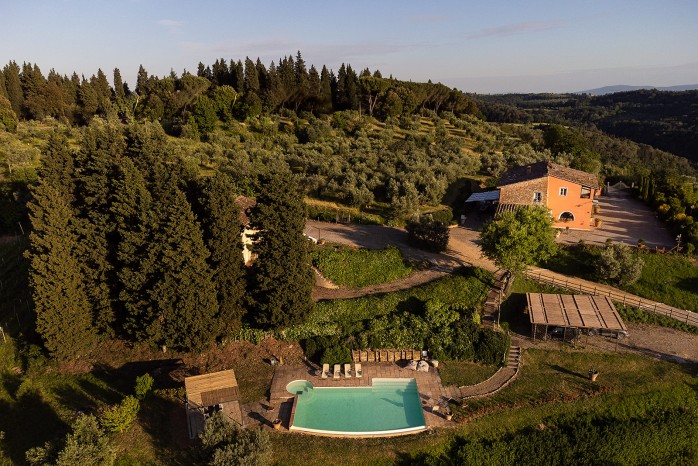
This charming holiday villa for 11 people is located in the countryside of Montelupo Fiorentino, right on the outskirts of Florence. Surrounded by olive trees and age-old cypress trees, the villa enjoys, from its unique hilltop position, a 360° breathtaking view over its Tuscan surroundings.
Originally built in the 11th century, the villa has undergone extensive and meticulous restoration. The result is that today this gorgeous villa enjoys all the latest modern facilities and comforts guests require for a memorable and truly unforgettable holiday. The villa consists of two separate flats, which are connected by a communicating door.
At guests’ disposal a swimming pool (8X3, up to 1.40 m deep, open from May to September) next to the villa’s outdoor terrace, with hydromassage jets, and a spacious independent garden.
The villa is on two floors and is furnished in the typical Tuscan style, dotted with exceptional objets d’art, such as fine paintings, ceramics coming from Montelupo and typical ornaments.
On the ground floor there are two large living rooms, a wonderful kitchen, fully equipped, with beautiful arched windows providing a spectacular view over the valley, a toilet, a spacious double bedroom, a bathroom with a large shower, a master bedroom with queen size bed, a separate dressing room, and a large en-suite bathroom with shower, as well as a studio with a large single bed. Outdoors there are two furnished covered terraces, ideal for your al fresco dining.
O
[Continues..]
Montelupo fiorentino - RIF. S383
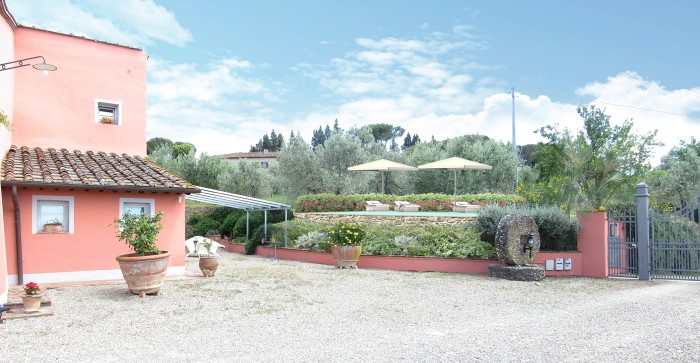
This charming holiday accommodation, which can accommodate up to 17 people, is located in the countryside of Montelupo Fiorentino, right on the outskirts of Florence. Surrounded by olive trees and age-old cypress trees, it consists of a villa and a cottage, which enjoy, from their unique hilltop position, a 360° breathtaking view over their Tuscan surroundings.
Originally built in the 11th century, the villa has undergone extensive and meticulous restoration. The result is that today this gorgeous villa enjoys all the latest modern facilities and comforts guests require for a memorable and truly unforgettable holiday. The villa consists of two separate flats, which are connected by a communicating door, and is rented together with the next-door cottage, a lovely renovated barn, with its own swimming pool.
Two swimming pools, in fact, are at guests’ disposal. An infinity swimming pool (11x7 metres open from May to the end of September) with a lovely Jacuzzi corner (2 metres large), from which one can enjoy a breathtaking view, and another pool (8X3, up to 1.40 m deep) next to the villa’s outdoor terrace, with hydromassage jets.
The villa is on two floors and is furnished in the typical Tuscan style, dotted with exceptional objets d’art, such as fine paintings, ceramics coming from Montelupo and typical ornaments.
On the ground floor there are two large living rooms, a wonderful kitchen, fully equipped, with beautiful arched windows providing a spectacular view over
[Continues..]
Gambassi Terme - RIF. S399
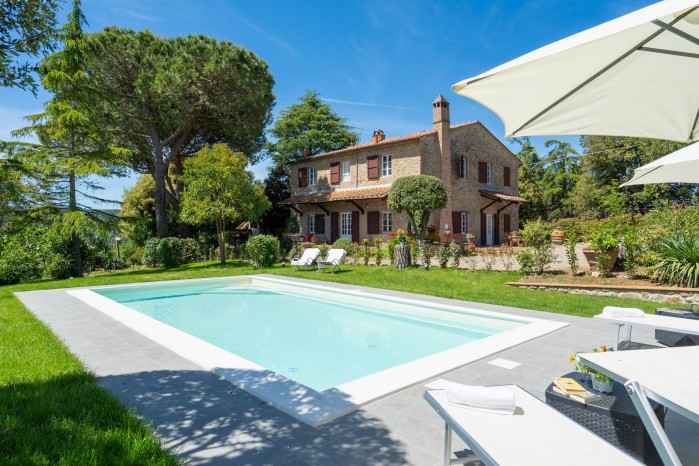
This beautiful stone villa (220 sq m) is located in a panoramic position, overlooking the typical Tuscan countryside. Located just 1 km from Gambassi Terme, a medieval village in the heart of Tuscany, set between Florence, Pisa and Siena, the villa is on two floors and has a large fenced garden (700 sq m), where there is a beautiful swimming pool (4x8 m, depth 130 cm, open from May to September), and a barbecue.
The villa is cosy and furnished in the typical Tuscan style. Entrance on the ground floor where there is a large living room with fireplace and Sat-TV, a dining room, a kitchen (4 burners, dishwasher, washing machine, toaster, kettles, moka pot, American coffee machine, pod coffee machine, microwave oven, fridge with freezer), and a bathroom with shower.
On the first floor there are 3 double bedrooms (one of which can be made into two beds), a further double bedroom with an added single bed and 1 bathroom with shower.
Facilities: Air conditioning in all rooms, Wi-Fi, 2 hairdryers, private parking. Also on the premises: fire extinguisher, first emergency kit.
To reach the property by car there is a 400 m stretch of dirt road.
Distances: Gambassi Terme (supermarket and shops) 1 km, nearest restaurant at 600 m, Certaldo at 10 km, San Gimignano 16 km, Volterra, 25 km, Florence 60 km, Pisa 65 km, beaches of Cecina 60 km, Siena 56 km.
[Continues..]
Tavarnelle - RIF. S371
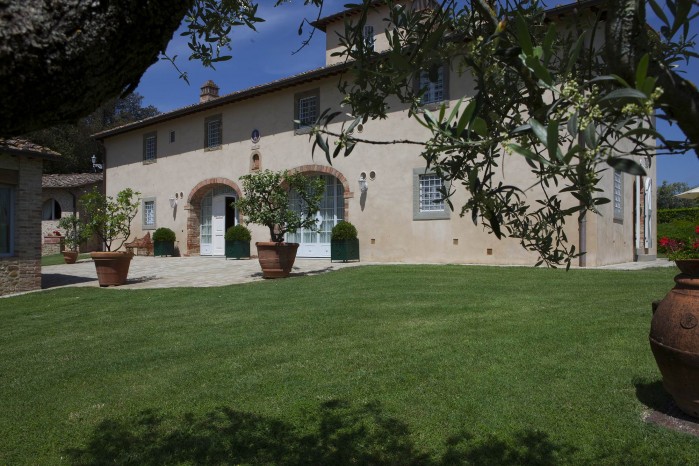
Stunning luxury villa with swimming pool and Spa facilities, located in the heart of Tuscany, between Florence and Siena, near lovely San Gimignano. It is the perfect location to enjoy the beauty of the Tuscan seasonal colours, immersed in the typical landscape of gently rolling hills covered in vineyards and olive groves, as well as to visit the many villages, old churches and art cities of Tuscany.
The villa is located at walk distance, just 1300 m, from Tavarnelle Val di Pesa, where you will find a selection of local shops, supermarkets and places to eat and drink.
The house, recently renovated and equipped with the most modern comforts, maintains its original and typical Tuscan style. In a very quiet location, a beautiful cypress-lined driveway, typically Tuscan, leads to your accommodation.
The villa has a large, stunning garden with a swimming pool and a heated Jacuzzi (open from 25th April to 10th Oct), just a few steps away from the barbecue area, perfect for your “al fresco dining”.
This elegantly and comfortably furnished villa is on 3 floors and can host up to 12 people (if you are only 8 people, please ask our special fare).
On the back side of the house, a Spa area with a Turkish bath, a sauna, a Jacuzzi and a gym occupies the whole lower floor.
The main entrance onto the ground floor is through a large, bright veranda with a fireplace (only decorative), antique stone floors and a comfortable sofa where you can enjoy a glass of the local Chianti wine.
[Continues..]
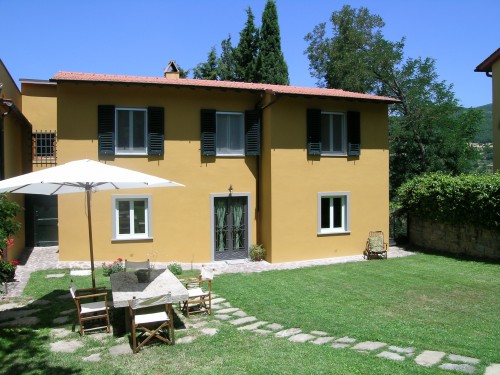
Rufina - RIF. S36
This beautiful holiday home in Chianti is located at 2 km from the village of Rufina (shops and restaurants), surrounded by the typical rolling hills of this area covered in olive groves and vineyards, among which the well-known vines of the Frescobaldi family. Part of a small complex of buildings, the cottage has a private garden of about 180 sq. mt, fenced by a stone wall with garden furniture and a barbecue. In front there is another garden with shared swimming pool (12x6mt, open May-Oct).
Traditional materials, such as terracotta and hardwood floors, were used in the Cottage’s restoration. The comfortable furnishings are in typical Tuscan country style. This self-catering holiday accommodation is on two floors and consists of a spacious living room with fireplace, Sat-TV and hi-fi stereo, a large, fully equipped kitchen, a double bedroom with bathroom and shower, and a bedroom with twin beds and bathroom with shower. Pets accepted. Internet wi fi connection free of charge. Washing machine available, shared.
This Tuscany villa for rent is in an excellent position for visiting most Tuscan art centres such as Florence, at only 25km, Siena, Arezzo and Pisa.
[Continues..]
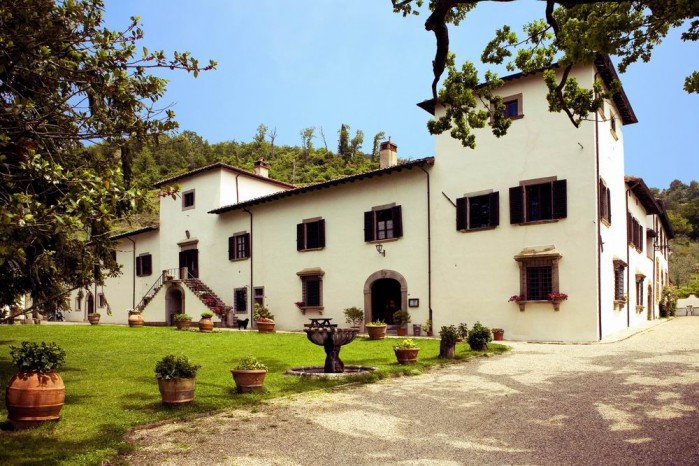
Pelago - RIF. S229
This beautiful Baroque villa with swimming pool near Florence was built in the 17th century and is rich in history as the hills it is immersed in. The estate comprises the villa, two farmhouses and a charming little chapel, which have been lovingly and carefully restored to their original splendour by the owners. In respect of Tuscan farm holidays the apartments, of various sizes, have been renovated and furnished in the typical regional style. Situated either in the villa or adjoining farmhouses each apartment has its own private furnished outdoor space, garden or terrace, telephone and Sat-TV. At the reception there is a small bar where one can as well buy the estate’s products such as olive oil, wine, sauces and honey, as well as order fresh bread. There is also a common lounge with Sat-TV and a meeting room, with internet point, which can accommodate up to 35 people. The villa’s restaurant is open at the weekends and serves traditional Florentine local dishes. Once weekly the owners also organize a guided visit of the villa during which one learns the history of the property and its surrounding areas as well has having the opportunity to taste the farmhouse products produced on this estate together with the local Chianti wine. Other guest facilities include a large swimming pool (20x10mt, open May-Oct), a Jacuzzi pool (3m), a tennis court, tennis table and a children’s playground. Nature lovers will enjoy exploring on foot, or by mountain bike or horseback, the ma
[Continues..]
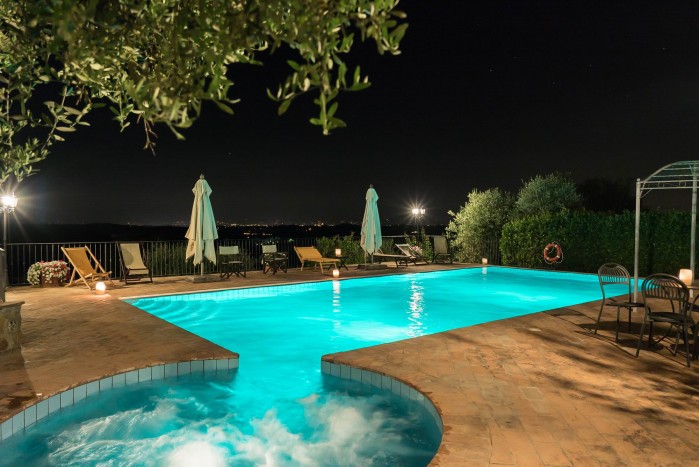
Montaione - RIF. S339
This beautiful villa is just one km from Montaione, a medieval village set in the heart of Tuscany, in a quiet, country area.
The holiday home is surrounded by a beautiful garden with swimming pool (12x6 m, open from the beginning of May to the end of September) and a large, comfy Jacuzzi. It consists of a main house measuring 240 sq m and a guesthouse of 40 sq m.
During the week, the owners offer a pizza dinner in the reception cottage facing the villa. Also available to clients are a kitchen garden and an orchard, where one can pick seasonal produce, games for children, a table tennis table and a barbecue. Clients can also book wine and olive oil tastings as well as a cook or a catering service. There are also three bikes to rent.
Distances: the village is within walking distance, as well as supermarkets (about 600-1000 m) and restaurants. Florence, Siena and Pisa are at about 55 km, while San Gimignano is only 20 km away and Volterra 29 km. Certainly a must is a visit to Certaldo and Colle Val d’Elsa.
[Continues..]
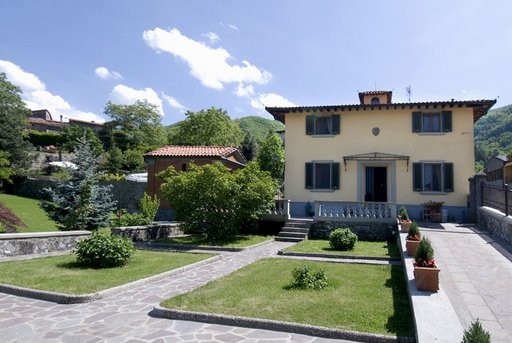
San Godenzo - RIF. S128
This beautiful and elegant holiday villa in Tuscany is located at Casale, a tiny medieval village in the heart of the Tuscan Apennines, 45 km east of Florence, surrounded by forests and uncontaminated nature, with a wonderful scenic view over the valley. This lovely villa can accommodate up to 7 people (150 sq.m.) and is on two floors. On the ground floor, there is a fully equipped kitchen with a fireplace, a living room with Sat-TV, a dining room, a study with a single sofa bed and a bathroom with a hydromassage shower. On the first floor, there are 3 double bedrooms and a bathroom with a corner bathtub for two. The property has a big floral garden with a large swimming pool (11x6mt, open Apr-Sept), a fitness room, a spacious, furnished veranda, a wood-burning oven, a barbecue, a fountain from which one can drink the fresh spring water of Ortale and even a small private consecrated chapel. Nearest shops and restaurant in Casale, at 3km.
This magnificent villa for rent in Mugello is in an ideal position for appreciating both the cultural and the natural aspects of Tuscany. Florence is nearby and the area is dotted with historical villages, like San Godenzo, founded in 1028, with its famous old Benedictine abbey, or Dicomano, dominated by the Romanesque parish church of St. Maria with its vigorous bell tower on one side, or Vicchio, the birthplace of Giotto, or Poggio di Frascole, where there is one of the main archaeological complexes of Mugello and Valdisieve. One can also
[Continues..]
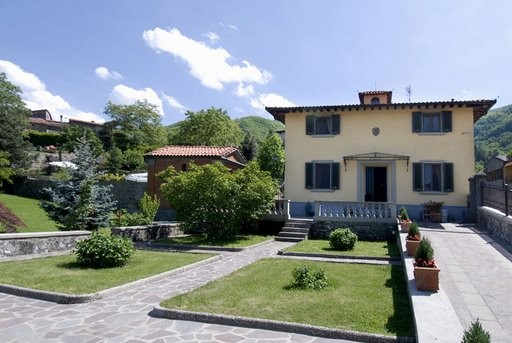
San Godenzo - RIF. S314
This lovely holiday accommodation in Mugello is perfect for large families and group of friends being a combination of a villa for 7 plus an annexe flat for 6. Located in the medieval village of Casale, in the commune of San Godenzo (at 4 km with shops and restaurants), these holiday homes are in the heart of the Tuscan Apennines, surrounded by nature and its magnificent forests and are ideal as a peaceful getaway in the mountains near Florence. The villa is on two floors. On the ground floor, there is a fully equipped kitchen with a fireplace, a living room with Sat-TV, a dining room, a study with a single sofa bed and a bathroom with a hydromassage shower. On the first floor, there are 3 double bedrooms and a bathroom with a corner bathtub for two. The property has a big flower garden with a large swimming pool (11x6mt, open Apr-Sept), a fitness room, a spacious, furnished veranda, a wood-burning oven, a barbecue, a fountain from which one can drink the fresh spring water of Ortale and even a small private consecrated chapel.
The apartment is on two levels, an independent entrance leads to the ground floor where there is a living room, 2 double bedrooms and a bathroom fitted out with a shower. 10 steps lead down to a lower level where there is a fully equipped kitchen with a dining area, a double bedroom and a bathroom fitted out with a shower. From this floor, a door leads out into a gorgeous private garden with a barbecue and heated Jacuzzi tub (3x3 m, 90 cm deep, 4 sea
[Continues..]
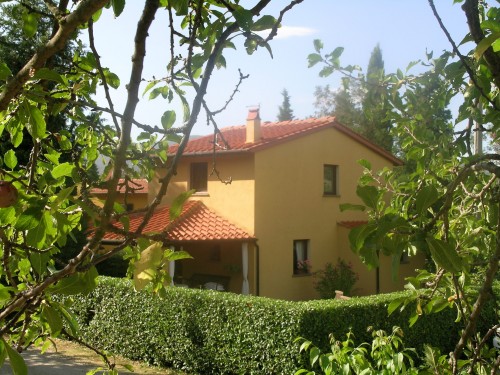
Rufina - RIF. S35
This lovely independent holiday home in Tuscany is located near the village of Rufina, surrounded by the typical rolling hills of Chianti covered in olive groves and vineyards, among which the well-known vines of the Frescobaldi family. Part of a small complex of buildings, with a total of 19 accommodations, this beautifully renovated barn preserves its original details such as the wooden beam ceilings, enriched by traditional materials as the Florentine terracotta tile flooring. The cottage is on two floors and can comfortably accommodate 5 people. On the ground floor there is a living room with a single divan bed and fireplace, a fully equipped kitchen, a dining area, a bathroom with shower and an outdoor veranda. On the first floor there are two double bedrooms and a bathroom with shower. The holiday home is surrounded by a private, furnished garden (200 sq m) with trees and bushes full of flowers. Also available a shared swimming pool in a well kept garden separate from the three holiday homes of this holiday estate. Pets welcome.
This villa with pool in Chianti offers a relaxing holiday as well as the possibility of visiting most Tuscan art centres such as Florence, Pisa and Siena as well as many medieval villages in the surroundings. Also opportunity, in the neighbourhood, to savour the local wine and gastronomic dishes as well as discover the cultural and handicraft traditions.
[Continues..]
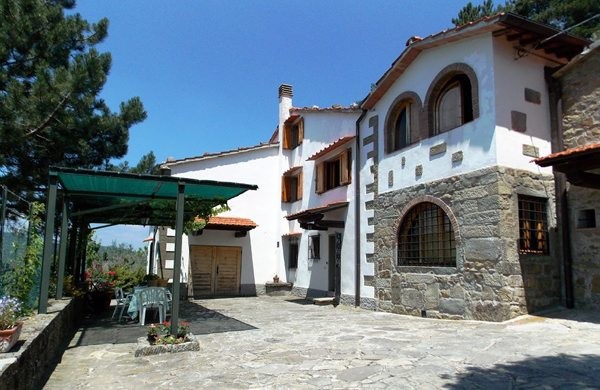
Londa - RIF. S76
This beautiful holiday villa in Chianti is located near the village of Londa (5 km), northeast of Florence (at 40km) at 520 mt above sea level, in a panoramic position on a hill overlooking the Sieve River. This independent house dates back to 1760 when it was built by the salvage from the demolition of Castle San Leonino. The self-catering holiday home is on two floors and can comfortably accommodate 8 people. On the ground floor there is a kitchen and a dining room, each with fireplace; on the first floor there is a living room with fireplace, four bedrooms and two bathrooms with shower. The central heating runs on the wood burnt in the 3 fireplaces. The villa is in a beautiful, fenced property and has a swimming pool (12x6mt, open middle May-Sept). Also available a wood-burning oven, ideal for cooking bread and pizza. Pets welcome.
This villa with pool in Tuscany is in a perfect location for both those who want to enjoy a relaxing vacation far from the madding crowd and for those who want to visit the many art centres Tuscany offers. Nearest shops and restaurant in Londa, 5km.
Special offer stay 14 nhts pay 12, just ask.
[Continues..]
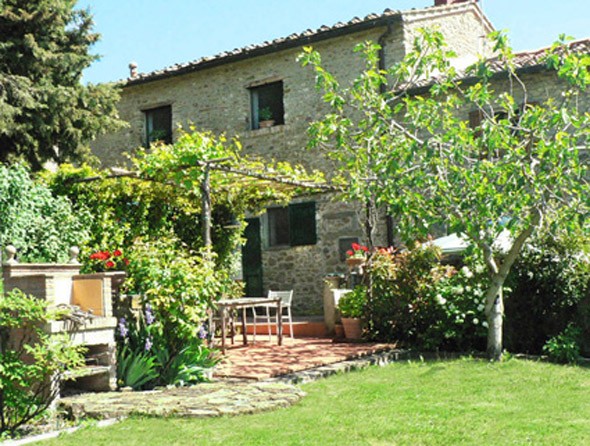
Lamole - RIF. S107
This holiday home in Tuscany is located in the heart of the Chianti region on the gently rolling hills of Lamole, exactly between Florence (30km) and Siena (30km), surrounded by cypresses, vineyards and olive groves. This XVII century stone farmhouse has been carefully restored by the owner, an architect, maintaining the original Tuscan traditional structure and tastefully furnished by the owner’s wife, a set designer, who has created a stylish and friendly ambiance with elegant furniture and refined decorations. The self-catering holiday home is on two floors and can comfortably accommodate 6 people. On the first floor a timber truss highlights the beautiful, large living room which comprises both a cooking and sitting area as well as a big fireplace. The windows overlook a magnificent view of the famous Chianti hills and the beautiful Tuscan countryside. A bathroom with shower and three bedrooms are to be found on the ground floor. Each bedroom has its personal and exclusive style and colour. Available are also heating, refrigerator, oven, washing machine, dishwasher, TV/videotape player, radio. Outdoor facilities include two big private terraces with original terracotta tile flooring and a garden with a panoramic view, fully equipped with outdoor furniture and a barbecue. The owners have intentionally avoided building a swimming pool so as not to interfere with the magical atmosphere of this area closely related to its rural traditions and wine production. Pets are
[Continues..]
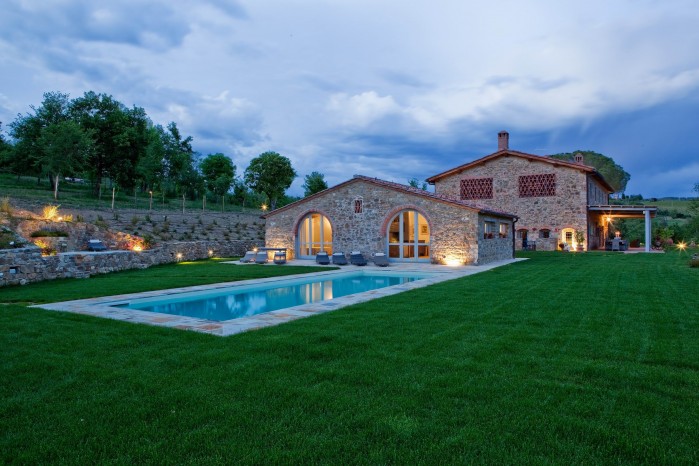
Badia a Passignano - RIF. S372
Dreaming of an inspirational holiday in the heart of the marvellous Chianti territory? Immerge yourself in a landscape which will awaken your senses with its colours, flavours, scents, sceneries and traditions. Here the medieval villages will introduce you to the authentic Tuscany of bygone days.
Here, at 4 km from Badia a Passignano, a stunning 11th century abbey, is located the holiday accommodation, a traditional stone country house.
The accommodation consists of a large villa of 460 sqm and a cottage of 110 sq m, and enjoys a breath-taking view over the valley. It is surrounded by a private garden with a beautiful swimming pool (12 x 4 m, depth 160 cm, open May-Sept, with outdoor shower) and an amazing Jacuzzi tub, all set in 40 hectares of private land, where guests can go for a walk or use the mountain bikes at their disposal.
The pergola of the main house is the perfect location for relaxing moments reading a book, sipping an excellent Chianti wine, or for al fresco dining.
The traditional architectural characteristics of the house – stone walls, wooden beams and arched ceilings – together with the colours and the Tuscan furniture bestow a warm and comfortable touch to your holiday. Not neglected are modern comforts such as Wi-Fi, air conditioning in all rooms, Sat-TV and DVD player.
The main villa has an entrance which leads into a spacious fully equipped kitchen (oven, fridge with freezer, dishwasher, microwave, espresso coffee machine, American coffee mac
[Continues..]
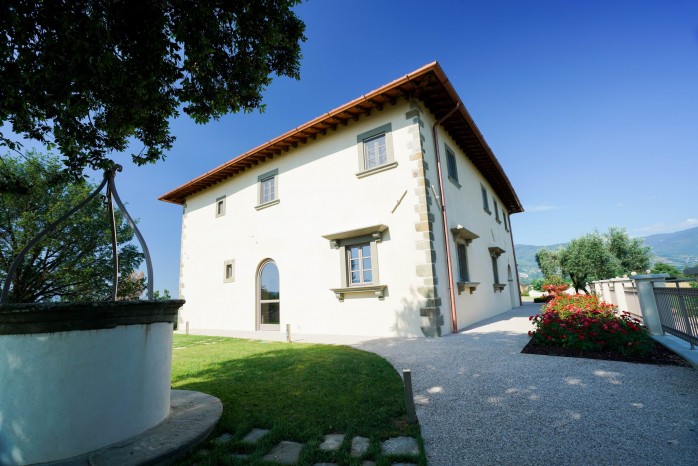
Reggello - RIF. S377
Large, elegant villa of the 16th century located in the heart of the Tuscan countryside on the Florentine hills, at just 2,5 km from the Mall Outlet village. The setting is fabulous; surrounded by vineyards, olive groves, castles, and tiny hamlets with their old stone churches; the villa enjoys amazing views, especially at sunset.
The villa, which can accommodate up to 18 people, has a large, well-cared garden, a splendid terrace with BBQ for al fresco dining, and a saltwater swimming pool overlooking the valley (14x7 m, 140 cm deep, with an outdoor shower, and which can also be heated on request) set on a sun deck, next to a smaller relax area with a sauna, a treadmill, an exercise bike, and a bathroom with shower.
Recently renovated, with particular attention to details and furnishing, the house has a warm atmosphere, a charm which will make your holiday unforgettable.
The property consists of the main villa and an annexe, a restored barn.
Main villa, 450 sq m.
Ground floor: 2 lounge rooms, one with fireplace and a larger relax lounge, Wi-Fi and Sat-TV, a dining room, a fully equipped kitchen (fridge-freezer, oven, dishwasher, microwave, espresso coffee machine, American coffee machine, kettle, toaster, blender, fruit juicer) and a toilet.
First floor: 5 double bedrooms (one with an additional single bed and 3 of them can be twin beds), 5 en-suite bathrooms with shower and hairdryers. The bedrooms, all with a view over the Tuscan countryside, are equipped with
[Continues..]
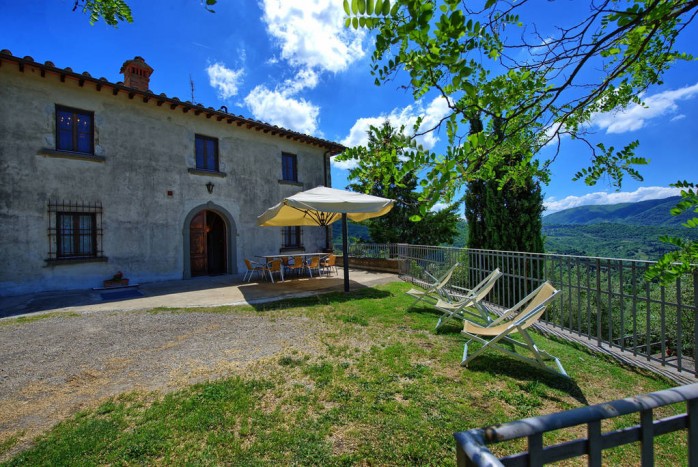
Greve in Chianti - RIF. S101
This holiday home in Chianti is hidden in the green shades of the olive groves and vineyards of the hills, at just a few km from Greve in Chianti (15km), the heart of the wine production. The villa is a typical Tuscan 17th-century manor house, totally renovated, which hosts 3 comfortable apartments, elegantly furnished, whereas other 2 spacious apartments are in an outbuilding. The estate is surrounded by a beautiful, quiet garden with a swimming pool (10x5, open from May to Oct).
Restaurant on site, only for the manor’s clients, where one can enjoy typical Tuscan dishes made by the owner during the week-ends and a pizza dinner during the week. Also at client’s disposal internet Wi Fi connection in common areas, a laundry room, and barbecue.
These holiday apartments in Tuscany are in an ideal location for all those seeking peace and quiet but also a perfect point of departure for visiting the beautiful attractions of the Chianti region as well as most Tuscan art centres such as Florence 20 km, Siena 55 km, San Gimignano, Arezzo, Montepulciano and Montalcino. Pets accepted. Nearest shops, supermarket, post office, restaurants, in San Polo village at ca. 3,2 km of distance (unpaved road).
[Continues..]
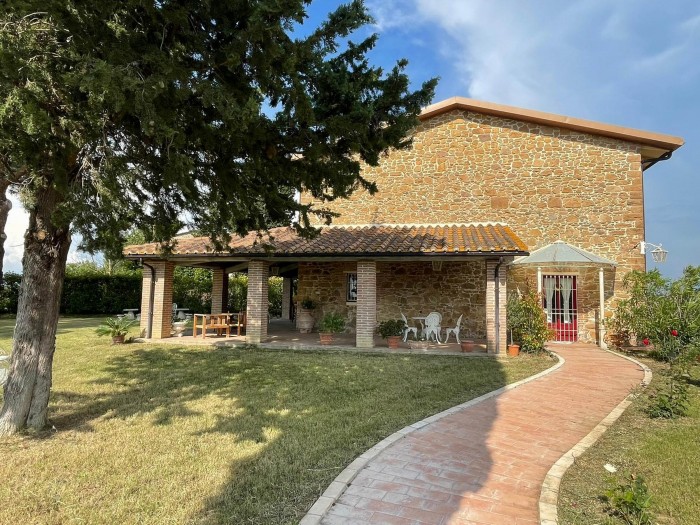
Montaione - RIF. S406
Splendid villa situated in a peaceful area in the heart of Tuscany, just 7 km from Montaione. Thanks to its scenic and quiet position, it is the ideal location for a relaxing holiday.
The villa is surrounded by a large, private garden, and thanks to its slightly elevated position enjoys a spectacular view over the surrounding countryside. The garden comprises a swimming pool (12x6 m, depth 115 cm, with a 9 sqm children's area 20 cm deep, open 1st May to 30th September) with a wide 145 sqm solarium and a hydromassage pool for 6 people and night illumination.
The spacious villa sleeps up to 9 guests and is on two floors. On the ground floor there is the entrance into a large living room with fire place, Sat TV and dining area, a fully-equipped kitchen (5-hub stove, oven, fridge-freezer, dishwasher, espresso moka and American coffee maker, kettle, toaster and more), and a toilet. Outdoors is a large veranda fully furnished with dining table and chairs as well as outdoor sofas and armchairs, perfect for alfresco dining and enjoying an aperitif whilst watching the sun set.
On the first floor there are 4 large bedrooms (2 double bedrooms with 140x200 cm beds and 2 twin bedrooms, in one of which an extra bed can be added) all with en-suite bathrooms.
Amenities: Wi-Fi, air conditioning in all the bedrooms, washing machine, hair dryers, barbecue, mosquito nets, first aid kit, fire extinguisher.
Distances: restaurant at 2 km, Montaione and supermarkets at 7 km, San Gimignano
[Continues..]
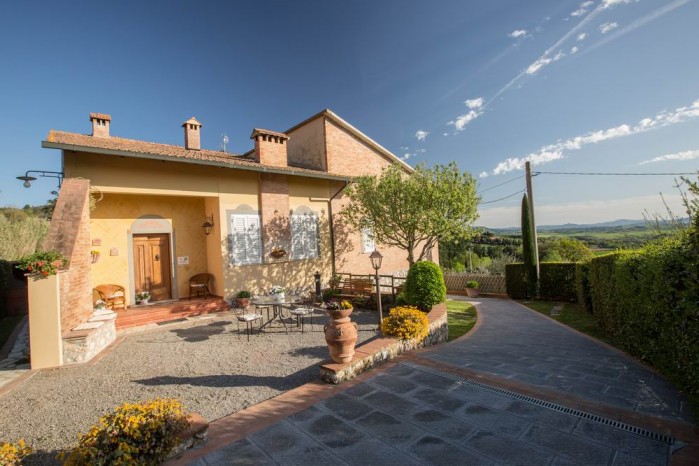
Iano - RIF. S264
This lovely villa in Chianti is located in Iano, a peaceful, little hamlet near Volterra and San Gimignano (at 20 km), right in the heart of Tuscany. The area has a picturesque landscape, full of fine views, with the typical colours of the Tuscan countryside. Recently renovated, the villa is tastefully furnished with early 20th-century style furniture, offering a comfortable and elegant ambience. The villa, on one floor with a partial upper ground floor, is ca. 225 sq. m. and consists of a large living room, a dining room, a big kitchen (fully equipped with fridge, oven, washing machine, American coffeemaker, toaster) with kitchen island, dining table and storeroom (which houses a vacuum cleaner and other household cleaning supplies and a second fridge/freezer), four bedrooms (2 double bedrooms and 2 either twin or double on request), four bathrooms fitted with showers and two terraces, one overlooking the swimming pool. At guest’s disposal also a laundry, Wi-Fi connection and air-conditioning. The panoramic view, both from the garden and the flats, is breathtaking.
Surrounded by a garden with olive grove, plus a 9x6 m swimming pool with children pool area, this villa is the ideal place where to rest and visit Tuscany. The garden also has a gazebo, ideal for reading in the shade or enjoy a glass of wine while admiring the sun set, a barbecue and a wood-burning oven. The house is at just 200 metres from the village where there is a grocer’s and a restaurant. Its excellent c
[Continues..]
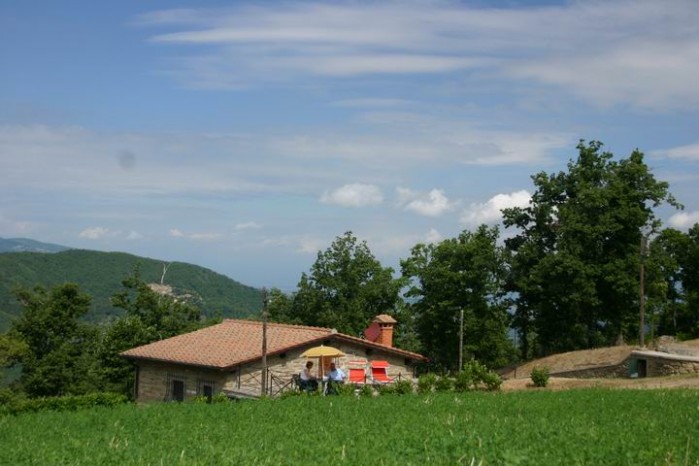
Londa - RIF. S77
This holiday home in Tuscany is located at 6 km from Londa, a lovely little medieval village about 40 km east from Florence, at 600 meters above sea level. The detached villa is at the foot of a beautiful wood and has a wonderful field right in front of it as well as a fantastic view. Surrounded by chestnuts and oaks it is the ideal place for a relaxing holiday in touch with the nature and the wild life of the Tuscan hills. The property is very large and there are various trekking trials in the woods. The house consists of a living/dining room with kitchenette, 2 double bedrooms, 1 twin bedroom and a bathroom with shower. The villa has a large garden and a wonderful sun terrace. The owner lives in a farmhouse at about 1.2 km on foot or 2 km by car. Also available to guests is the swimming pool at the owner’s farmhouse. Pets welcome.
This villa in Chianti is in a perfect location for both those who want to enjoy a relaxing vacation far from the madding crowd and for those who want to visit the many art centres Tuscany offers.
[Continues..]
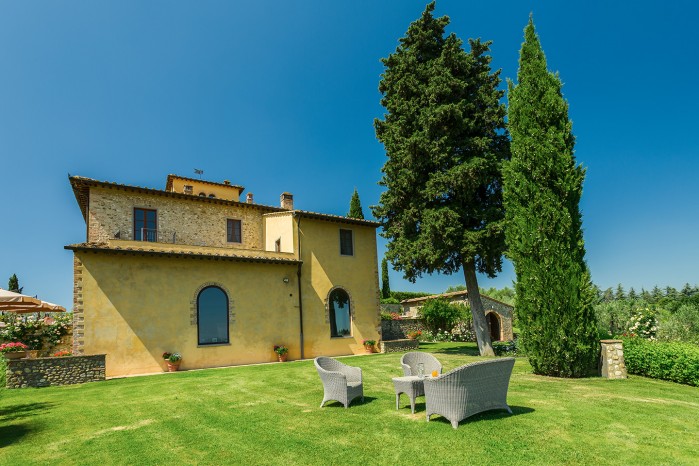
Tavarnelle - RIF. S376
Stunning villa located in the heart of Tuscany, at 2 km from Tavarnelle, between Florence and Siena. It is an amazing place surrounded by green hills, vineyards and olive groves, ideal for a relaxing, unforgettable holiday, and as a perfect base for excursions.
This large luxury property, consisting of a main villa and a cottage, can accommodate up to 20 people (please enquire for our special rates for 12 or 16 people). It has been recently renovated, combining the preservation of the original features, such us wooden beam ceilings, brick arches, with modern comforts, such as the spa and wellness area, the outdoor swimming pool with Jacuzzi corner (not heated), Wi-Fi and air conditioning.
Main villa, 600 sq m. On the lower floor there is, for exclusive use, the wellness centre and the SPA, with a caldarium, a hot plunge bath used in Roman bath complexes. The centre also consists of a heated hydromassage, sauna, automatic Shiatsu massage bed, gym, a changing room, and a shower. Massages on request.
Ground floor: A large, paved area, originally the farmyard, leads into a lounge with characteristic terracotta tile flooring and stone walls, archways and a fireplace. From here one enters the main living room with a fireplace, Sat-TV, a large dining room with fireplace with access to the outdoor areas furnished for al fresco dining, a fully equipped kitchen (stove, fridge with freezer, ice maker, dishwasher, espresso machine, coffee maker, juicer, kettle, microwave, food mixer,
[Continues..]
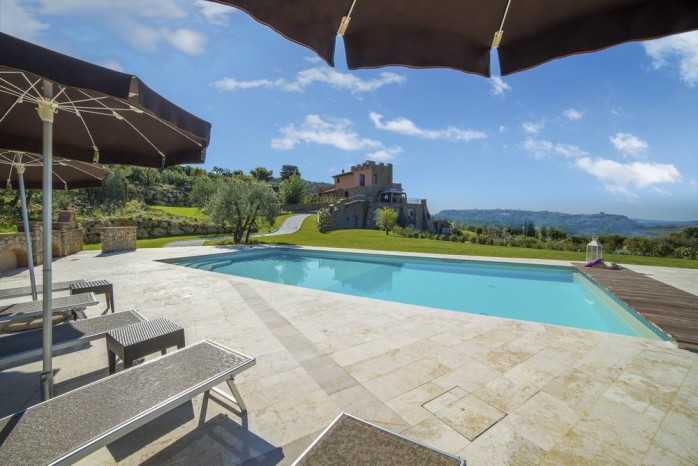
Iano - RIF. S312
This superb villa is built on the remains of a medieval watchtower used to defend the town of Volterra. It is located in the tiny hamlet of Iano, surrounded by stunning countryside, and just 20 km from Volterra and San Gimignano. Its strategic position allows breathtaking, clear views over the valleys and the alabaster town of Volterra from the many large windows of the villa as well as from the grounds including the amazing pool terrace.
A careful restoration of the house has maintained all the historical details of the building, and the result is a luxurious and refined atmosphere where tradition perfectly melts in with all the modern appliances and delightfully romantic furnishings.
The accommodation, 270 sqm, is on two levels. It comfortably accommodates up to 8+1 in 4 bedrooms with 4 en-suite bathrooms with shower.
Ground floor: Access directly into the living/dining room (fireplace, CD/DVD player, Sat-TV) which is spacious and bright thanks to the large arched windows overlooking the garden and offering extraordinary views of the countryside. Large French windows open onto a furnished covered terrace with a barbecue.
The kitchen is very large and fully equipped (kitchen hobs, toaster, kettle, coffee machines, oven, fridge with freezer, microwave, dishwasher). Two twin bedrooms (convertible into doubles) with en-suite bathrooms with shower, and a toilet. All bedrooms benefit from a superb view through their large windows or French windows making the rooms bright an
[Continues..]
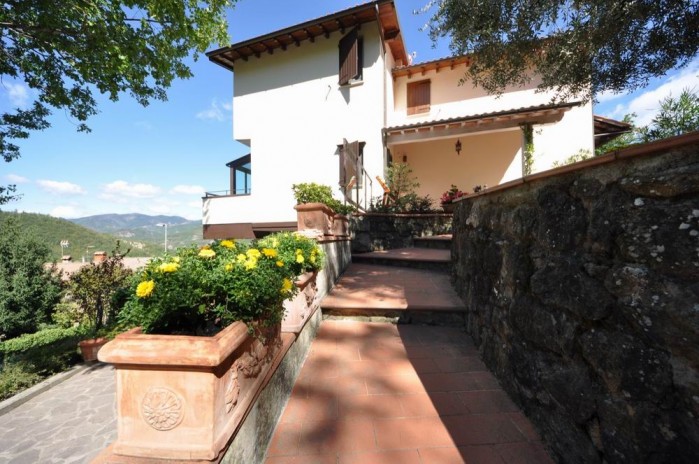
San Godenzo - RIF. S254
This beautiful holiday home in Tuscany is located at Casale, a tiny medieval village in the heart of the Tuscan Apennines, surrounded by forests and uncontaminated nature, with a wonderful scenic view over the valley. This lovely holiday accommodation has recently been tastefully renovated and consists of a semi-detached villa with an independent entrance and a charming annexe. The villa is on two floors and can comfortably accommodate 4 people. On the ground floor, there is a fully equipped kitchen and dining area, a living room with 2 sofas, a fireplace and satellite TV; on the first floor there are 2 double bedrooms, which can be turned into twin bedrooms on request, and a bathroom fitted with a shower. The annexe, for 2 people, consists of a living room with a dining area and fully equipped kitchenette, a double bedroom and a bathroom fitted with a shower. Outside, the fenced garden offers a relaxing haven with its sun loungers and outdoor hot tub, whereas the furnished veranda and barbecue present an ideal location for al fresco dining. Car park available both inside and outside the property.
This holiday accommodation in Mugello is at 3 km from the nearest food shop and restaurant, in San Godenzo, a medieval town founded in 1028, and 13 km from the town of Dicomano, where one can find supermarkets, shops, banks and a railway station from which one can catch a direct train to the centre of Florence (a 30-minute trip). Also ideal for a relaxing holiday im
[Continues..]


© 2024 copyright Tuscany Holiday Rent S.L. - Calle Gema 4, 41020 Sevilla ,
P.iva ES B90300302
info@tuscanyholidayrent.com
info@tuscanyholidayrent.com